
- Conditioning builds your engine: heart, lungs and the ability to keep going
- Most classes use a few simple formats: intervals, EMOM, AMRAP and circuits
- Start at a pace you could hold for the whole piece, then build
- Not every conditioning session should be flat out
What conditioning means
In gym language, conditioning is training that improves your ability to keep working: your heart and lungs, plus the endurance of your muscles. It covers everything from steady rowing to short, sharp intervals on an air bike. You will also hear it called cardio, metcon (short for metabolic conditioning) or engine work.
The benefits are wide. Better conditioning supports heart health, makes everyday life feel easier, helps you recover between sets in strength training and supports fat loss by increasing the energy you use. The UK guideline of 150 minutes of moderate activity a week is essentially a conditioning target.
It is also the part of fitness that improves fastest. Many beginners notice a clear difference in how quickly they recover from an effort within just a few weeks of regular sessions.
The common formats, decoded
Conditioning classes lean on a handful of formats. The names sound technical, but the ideas are simple. Our gym jargon guide has more terms if you need them.
- Intervals: work for a set time, rest for a set time, repeat. For example, 30 seconds hard on a bike and 90 seconds easy, eight times.
- EMOM (every minute on the minute): start a set number of reps at the top of each minute and rest for whatever is left. Faster work earns more rest.
- AMRAP (as many rounds or reps as possible): complete as much of a circuit as you can in a fixed time, at a pace you can sustain.
- For time: complete a set amount of work as quickly as you can manage with good form.
- Circuits or stations: move between exercises in turn, often with a partner or small group.
- Steady state: a longer effort at a consistent, conversational pace, such as 20 minutes of easy rowing.
A single class might combine two of these, for example a steady piece to warm up followed by short intervals, or an EMOM followed by a partner circuit.
Partner formats are common and beginner-friendly. Typically one person works while the other rests, or you split a set number of reps however you like. It means nobody is racing the whole room, and a partner who is fitter than you simply does a bigger share.
The kit you will meet
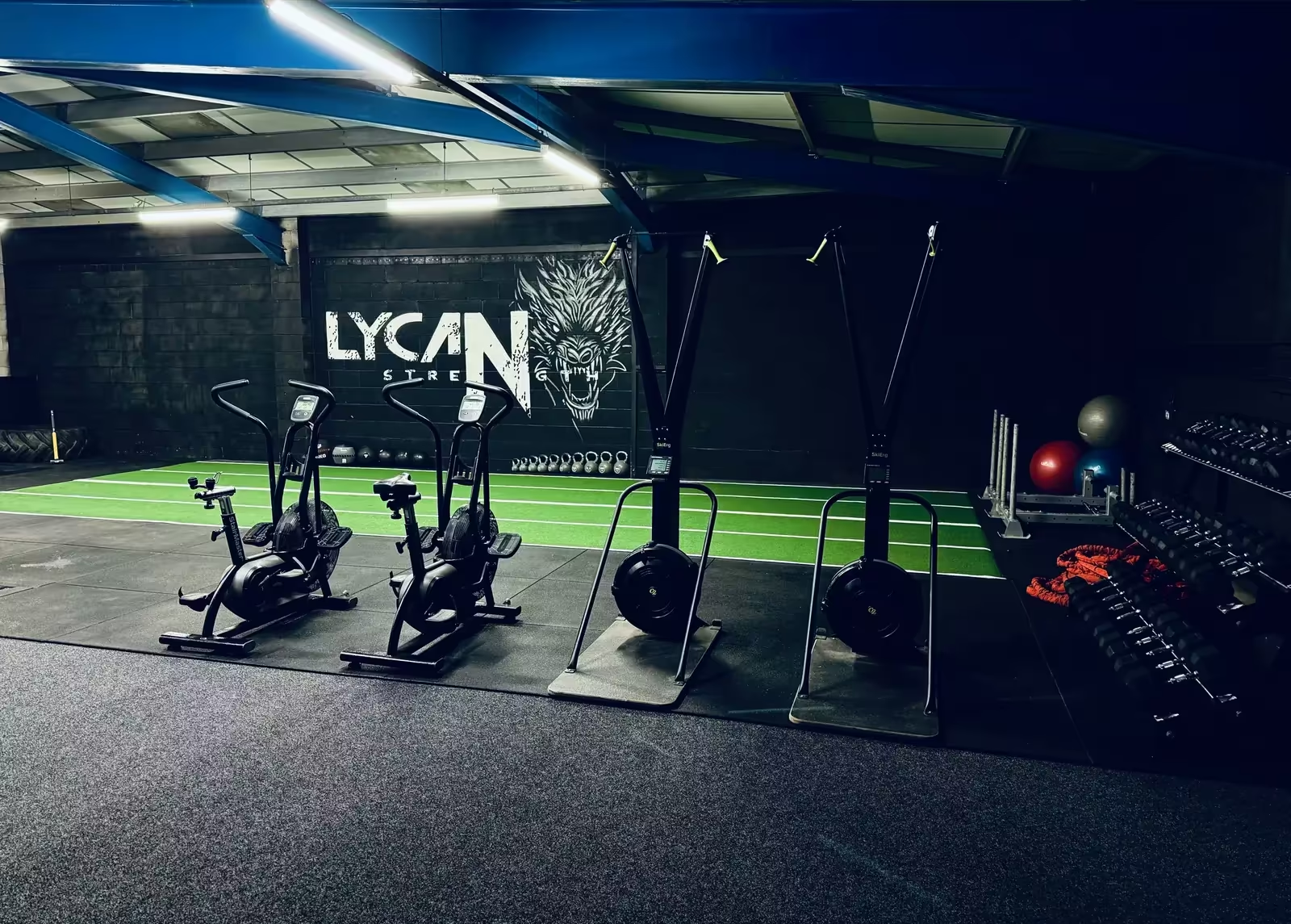
Conditioning uses equipment that lets lots of people work hard safely at the same time. Common kit includes:
- Rowing machine: full body and low impact, good for all levels. Technique matters, so see our rowing machine guide.
- Air bike: the fan bike with moving handles. The harder you push, the harder it gets, which makes it brutal for sprints and gentle for easy work. See the air bike guide.
- SkiErg: a standing machine that mimics the double-pole action of cross-country skiing.
- Sleds: pushed or pulled along turf or a track, building leg drive and grit.
- Kettlebells, dumbbells, wall balls and boxes: for swings, carries, throws and step-ups.
- Your own body weight: burpees, mountain climbers, lunges and squats.
Everything scales easily. You control the pace on a rower or bike, choose a lighter kettlebell or sled load, or swap a burpee for a step-back version without the jump.
How to pace yourself
The most common beginner mistake in conditioning is going off like a rocket and grinding to a halt after two minutes. Pacing is a skill, and it is worth learning early. For longer pieces, start at an effort you could hold for the whole time, and only push in the final third if you feel good.
The talk test is a simple guide. At an easy pace you can chat in full sentences. At a moderate pace you manage short sentences. At a hard pace, a few words at a time. Flat out, nothing at all. Most of your conditioning should sit in the easy to moderate range, with hard efforts used sparingly.
If you like data, a heart rate monitor can help keep easy sessions genuinely easy. But it is not essential. Your breathing tells you most of what you need to know.
Hard is not always better
It is tempting to judge conditioning by how wrecked you feel afterwards. But a session that leaves you on the floor every time is hard to recover from and easy to dread. Fitness is generally built best with a mix of easier, longer work and shorter, harder efforts.
High-intensity intervals have their place and are time-efficient, but they are not magic, and doing them every day tends to backfire. Our guide to HIIT for fat loss explains what they can and cannot do. For beginners, one or two conditioning sessions a week alongside strength training is plenty.
Stop and tell the coach if you feel chest pain, dizziness, faintness or breathlessness that does not settle with rest. Normal hard breathing eases within a minute or two. Those warning signs do not, and they need checking.
Conditioning classes at a hybrid gym
At a hybrid gym, conditioning sits alongside strength work in a balanced week. For most beginners, one or two conditioning classes plus two strength classes is a well-rounded programme, which we explore in is hybrid training suitable for beginners?
At Lycan Strength, Engine classes are designed to 'build lasting cardiovascular health' and run on Monday, Wednesday and Friday, while Lycan Shred is the higher-intensity conditioning session on Friday evening. Every class is scalable, and a beginner might sensibly start with Engine before trying Shred. The timetable shows when each runs.
Members' guide
Keep reading with your free week
The full guide is for members and people on a free trial. Claim 7 days free and it opens straight away on this device, along with every other guide.
Already a member? Log in to read it
Unlock the full guide
Seven days of classes, free. We will be in touch to book your first session.
Questions
Are conditioning classes good for beginners?
Yes, as long as they are scaled and you pace yourself. Start at a moderate effort and focus on moving well rather than finishing first.
What is the difference between conditioning and HIIT?
HIIT is one type of conditioning built on short, very hard efforts. Conditioning also includes steady, moderate work and longer intervals.
How many conditioning classes should I do a week?
One or two alongside two strength sessions works well for most beginners. Add more gradually once you are recovering well.
Will conditioning classes help me lose weight?
They increase the energy you use and improve fitness, which helps. Fat loss still depends mainly on your overall diet.
General guidance for healthy adults. If you have a medical condition, injury or are pregnant, check with a health professional before changing your training or diet.