
- HIIT builds fitness in less time, but it does not burn fat faster than steady cardio.
- The afterburn is real but small, usually tens of kcal.
- One to three sessions a week alongside lifting is plenty for most people.
- Build a base first if you are new, returning or carrying a lot of weight.
What HIIT actually is
High intensity interval training means short bursts of very hard effort separated by easier recovery. Proper HIIT is uncomfortable: the hard parts sit around 8 or 9 out of 10 effort, and you would not want to hold them for long.
Many sessions sold as HIIT are really circuits at a moderately hard pace. That is still good training, but the difference matters, because genuine high intensity work places more stress on your body and needs more recovery. Common formats include:
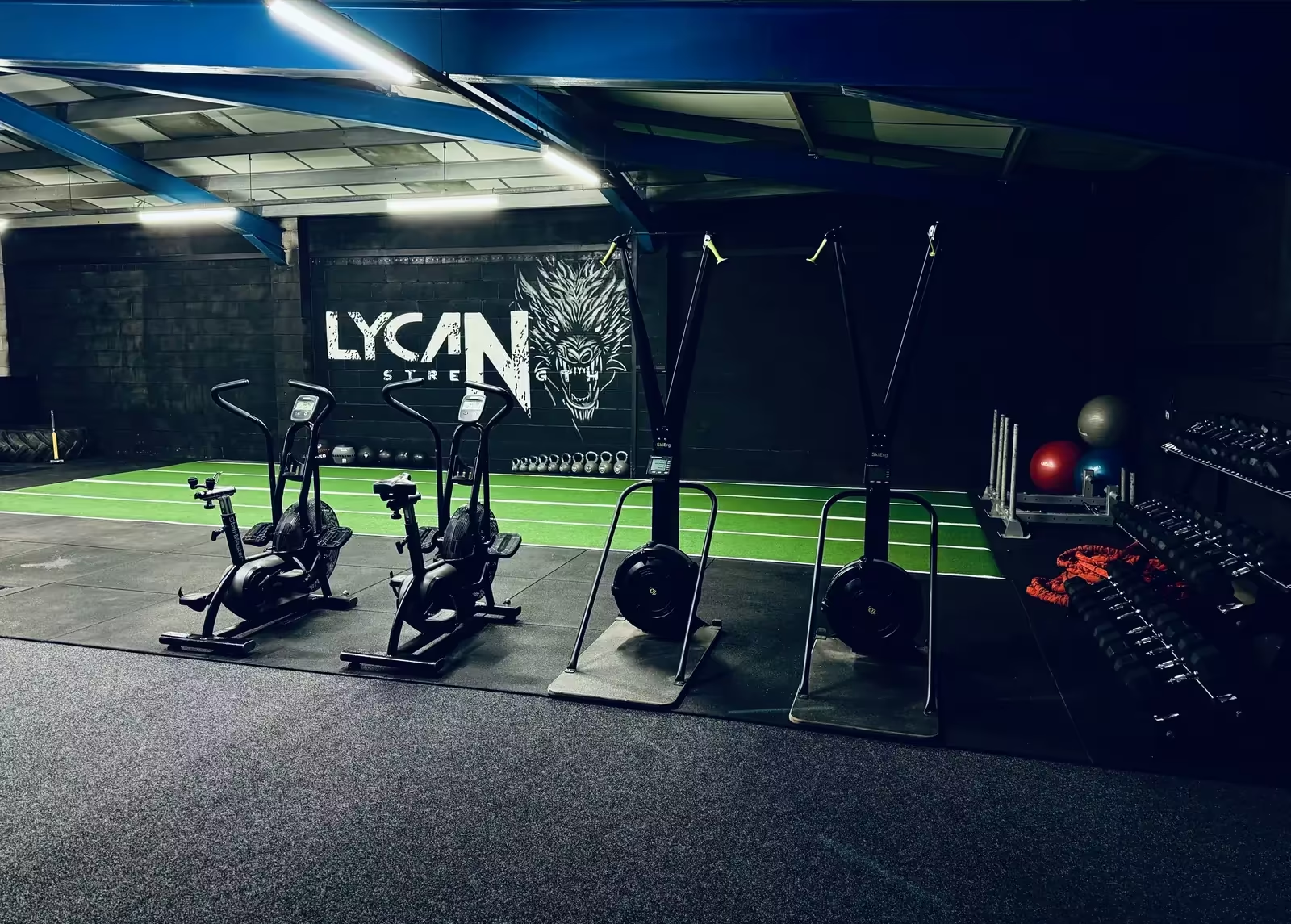
- Short sprints: for example 20 seconds hard and 40 seconds easy, repeated 8 to 10 times on an air bike.
- Longer intervals: 1 to 4 minutes hard with equal or slightly shorter recovery, often on a rower or SkiErg.
- Circuits and EMOMs: a set amount of work every minute on the minute, mixing movements such as kettlebell swings, burpees and calories on a machine.
What it can do
- Build fitness fast. Hard intervals improve your aerobic capacity efficiently, which makes everything from stairs to a HYROX race feel easier.
- Save time. Research consistently shows interval training can deliver similar fitness gains to longer steady sessions in less total time.
- Improve health markers. Interval training improves blood sugar control and blood pressure in many people.
- Add variety. For people who find steady cardio dull, intervals can be the thing that keeps them training at all.
Those are real benefits, and they are why intervals belong in most well-rounded programmes. The mistake is expecting them to do a job they are not built for. Intervals also work well as a finisher: 6 to 8 minutes at the end of a strength session gives you a conditioning hit without a separate trip to the gym.
What it cannot do
When studies compare HIIT with steady cardio and the total energy burned is similar, fat loss is broadly similar too. HIIT has no special fat-burning property. The afterburn is real but usually small, often tens of kcal, so it will not make up for eating above your maintenance.
HIIT also cannot replace strength training. It does not protect muscle the way lifting does, and doing a lot of it while dieting can leave you too tired to lift well. Five hard interval classes a week is a common way to feel busy and exhausted without changing your shape much. Cardio vs weights for fat loss explains why the two should work together.
How much is enough
For most people, one to three HIIT sessions a week is plenty, with at least a day between them. If you already lift three times a week, one or two is usually the sweet spot. More is not better, especially in a deficit, when recovery is slower and sleep can suffer.
A sensible week for a busy person might be two strength sessions, one interval session, one steady 30-minute session or long walk, and daily steps. That gives you strength, a stronger engine and a decent weekly energy use without constant fatigue.
Watch for signs of overdoing it: resting heart rate creeping up, poor sleep, nagging aches and sessions that feel harder at the same output. Our guide to overtraining and under-recovery covers what to do if that sounds familiar.
Three sessions to try
- Air bike sprints: 5 minutes easy, then 10 rounds of 20 seconds hard and 40 seconds very easy, then 5 minutes easy. The air bike guide covers setup and technique.
- Rower intervals: 5 minutes easy, then 4 to 6 rounds of 2 minutes hard with 2 minutes of easy rowing between, then a gentle cool-down.
- Mixed EMOM for 16 minutes: odd minutes 12 to 15 kettlebell swings, even minutes 10 to 14 calories on the rower. Rest for whatever is left of each minute.
Scale everything to your level. A beginner might do half the rounds at a lower effort and still get a strong training effect. The right intensity is hard enough that the last round is a struggle, not so hard that you cannot finish it with good form.
Getting more from each session
- Warm up properly. Five to ten minutes of easy work building to a couple of short, harder efforts. Going from cold to flat out is how hamstrings and calves get strained.
- Pick low-impact kit. Air bikes, rowers and SkiErgs let you work hard without the pounding of repeated jumps or sprints on a hard surface, which matters if you are heavier or have sore knees.
- Keep the hard parts hard and the easy parts easy. If every interval feels like the same moderate slog, you are doing a tempo session. That is fine, but it is not HIIT.
- Log your numbers. Watts, calories or distance per interval let you see your fitness improving even when the scales are being stubborn.
Who HIIT suits, and who should build up first
HIIT suits people with a base of fitness, healthy joints and limited time. If you are new to exercise, carrying a lot of weight, returning after years off, or managing a heart or blood pressure condition, build a base first with walking, cycling and strength work, and check with your GP if you have any medical concerns. Jumping straight into all-out sprints is a common way to get injured or put off training for good.
Coached conditioning classes can be a good middle ground because the coach sets the intensity and scales it to you. Our guide to conditioning classes explains what to expect. At Lycan Strength, Engine classes focus on cardiovascular fitness and Lycan Shred is the high-intensity conditioning option, and both are on the class timetable.
Members' guide
Keep reading with your free week
The full guide is for members and people on a free trial. Claim 7 days free and it opens straight away on this device, along with every other guide.
Already a member? Log in to read it
Unlock the full guide
Seven days of classes, free. We will be in touch to book your first session.
Questions
Is HIIT better than steady cardio for fat loss?
Not when the calories burned are similar. HIIT is more time-efficient for fitness, while steady cardio is easier to recover from. Both work alongside a calorie deficit.
How long should a HIIT workout be?
The hard intervals often add up to only 5 to 20 minutes. With a warm-up and cool-down, 20 to 40 minutes in total is typical.
Can I do HIIT every day?
It is not a good idea. Hard interval work needs recovery, and most people do best with one to three sessions a week.
Is HIIT safe for beginners?
Scaled versions can be, but beginners usually do better building a base with walking, cycling and strength training first.
General guidance for healthy adults. If you have a medical condition, injury or are pregnant, check with a health professional before changing your training or diet.