
- Food and daily movement create most of the deficit. Training decides what you keep.
- Cardio burns more in the session; weights protect muscle so the loss is mostly fat.
- The afterburn from any session is usually small.
- Combine two or three strength sessions, one or two cardio sessions and daily steps.
Why this is the wrong fight
The cardio versus weights argument assumes exercise is the main way you lose fat. It is not. Your food intake and daily movement create most of the calorie deficit, and training mostly decides what you keep and how fit you are while it happens.
With that in mind, the better question is which mix of training gives you the best body and health at the end, while fitting into a real week with work, family and the school run. For almost everyone, the answer includes both.
Both types of training also improve health in ways that have nothing to do with the scales: lower blood pressure, better blood sugar control, stronger bones and better mood. Those benefits arrive whether or not you lose a single kilo.
What each burns in the session
Steady cardio usually burns more energy per minute than lifting, mainly because you are moving continuously. A 45-minute bike, row or run at a steady pace can use several hundred kcal for an average-sized adult, while a weights session of the same length often uses less because of the rest between sets.
That sounds like a clear win for cardio, but the gap is smaller than fitness trackers suggest, and it shrinks further once appetite enters the picture. Many people find a long cardio session leaves them ravenous, and some of those calories come straight back at the next meal.
Spread it over a week and the picture evens out further. Three weights sessions might use a few hundred kcal less in total than three cardio sessions, which is roughly one biscuit-heavy afternoon. The difference is real, but it is small next to what you eat and how much you walk.
The afterburn: less than you have heard
EPOC (excess post-exercise oxygen consumption), often called the afterburn, is the extra energy your body uses to recover after a session. It is real for both hard intervals and heavy lifting, but it is usually a modest amount, often tens of kcal rather than hundreds. It is a nice bonus, not a reason to pick one type of training over another. Heavier lifting and harder intervals produce a bit more afterburn than easy steady work, but not enough to plan your week around.
The longer-term effect of lifting matters far more. Keeping and building muscle means you keep your strength, your shape and your ability to train hard, and that pays off over months rather than in the hour after a session.
What the research generally shows
When studies compare cardio only, weights only and a combination, a consistent pattern appears. Cardio tends to produce slightly more weight loss. Weights tend to keep or add muscle. The combination generally gives the best improvement in body composition, fitness and health markers.
It helps to separate weight from fat here. Someone doing only cardio in a deficit might lose slightly more on the scales, but some of that can be muscle. Someone who lifts may lose a little less weight but more fat, and look noticeably different for it. The scales cannot tell you which happened; a tape measure and your strength numbers can.
UK health guidance points the same way. The Chief Medical Officers recommend at least 150 minutes of moderate activity or 75 minutes of vigorous activity a week, plus muscle strengthening activity on at least two days. Brisk walking counts towards the first part, and lifting covers the second. Neither one alone ticks every box.
How to combine them
A simple weekly structure for someone training four times:
- Two or three strength sessions, as covered in strength training for fat loss.
- One or two conditioning sessions: intervals on a rower, air bike or SkiErg, or a steady 30 to 40 minutes.
- A daily step target of around 8,000 to 10,000, or at least 2,000 to 3,000 above your current average.
If you do both on the same day, lift first if strength is your priority, or split them into morning and evening. The interference effect, where cardio blunts strength gains, is mostly a concern for very high volumes of endurance work. For general fitness, sensible amounts of both sit happily together, and conditioning without losing strength explains how to manage the balance.
Where hybrid training comes in
Hybrid training simply means training strength and fitness together on purpose. It suits fat loss well because you keep muscle, build a proper engine and get enough variety to keep turning up, which is the part most plans fail on. Our guide to hybrid training covers the approach in more depth.
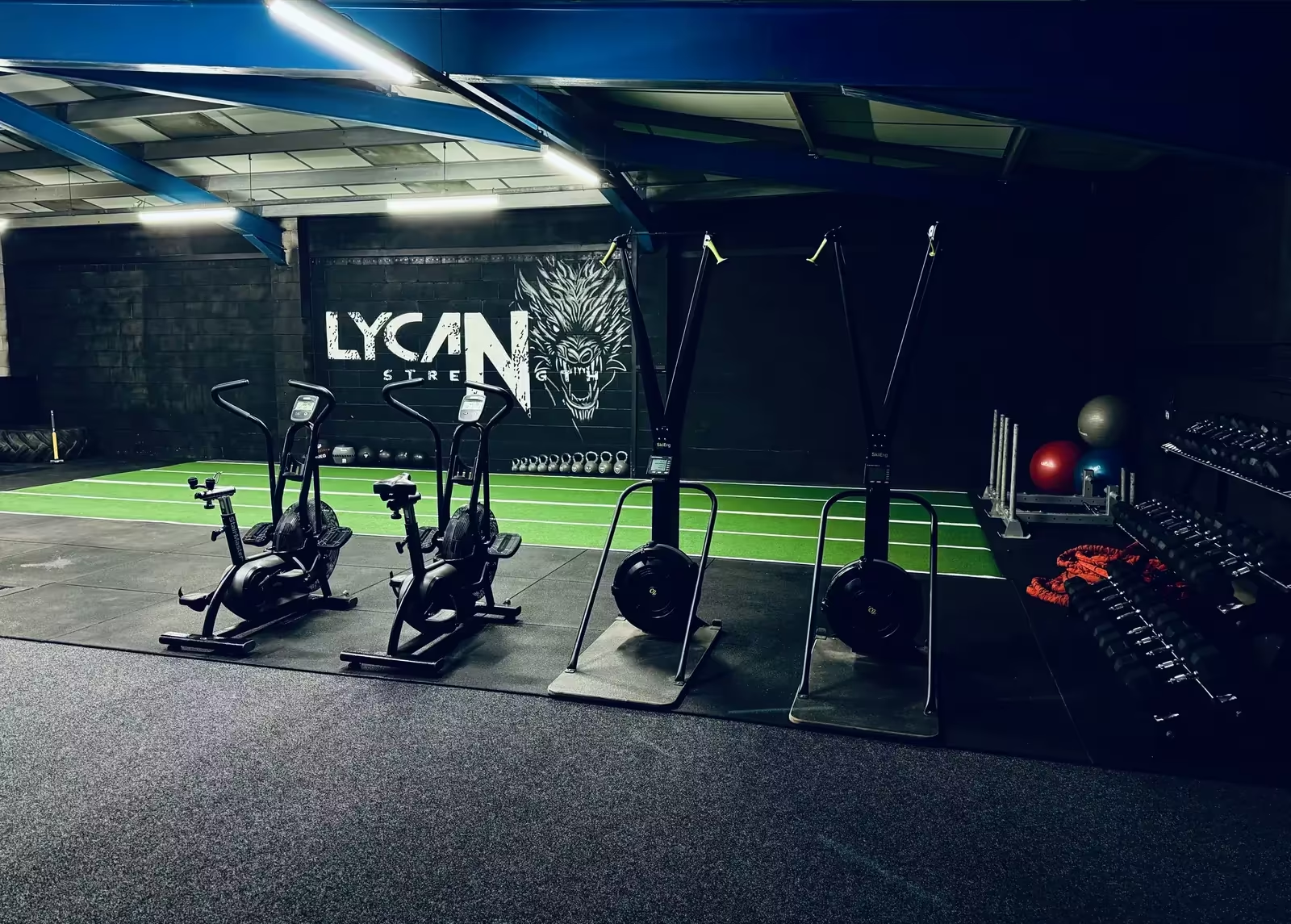
It is also how Lycan Strength's timetable is built, with Full Body, Upper and Lower classes alongside Engine sessions designed to build cardiovascular fitness, so members get both sides of the equation without having to plan it themselves.
Choosing for your situation
- Short on time: prioritise two strength sessions and daily walking. Add cardio when you can.
- Sore joints: use low-impact cardio such as cycling or rowing and do strength work in pain-free ranges. Losing weight with knee pain has more detail.
- Over 40 or 50: strength work becomes more valuable with each decade because it slows the natural loss of muscle and bone, so keep it at the heart of your week.
- Training for an event: the event dictates the mix, but keep at least two strength sessions in the week.
- You hate one of them: do more of the one you enjoy. Consistency beats the perfect plan every time.
Whatever mix you choose, the rules around it stay the same: a moderate calorie deficit, plenty of protein and enough sleep. Get those right and either type of training will move you forward.
Members' guide
Keep reading with your free week
The full guide is for members and people on a free trial. Claim 7 days free and it opens straight away on this device, along with every other guide.
Already a member? Log in to read it
Unlock the full guide
Seven days of classes, free. We will be in touch to book your first session.
Questions
Should I do cardio or weights first?
Do whichever matters most to you that day first. If strength is the priority, lift first. For general fat loss, the order matters far less than doing both consistently.
Can I lose fat with only weights?
Yes, as long as you are in a calorie deficit. Adding daily walking makes it easier and brings extra health benefits.
Does running burn muscle?
Not in sensible amounts. If you eat enough protein and keep lifting, running does not strip muscle, although very high volumes can make strength gains harder.
How much cardio should I do to lose weight?
Enough to meet the 150 minutes a week guideline, which brisk walking can cover, plus one or two harder sessions if you enjoy them.
General guidance for healthy adults. If you have a medical condition, injury or are pregnant, check with a health professional before changing your training or diet.