
- Each kilo lost takes several kilos of load off your knees with every step.
- Low-impact options like cycling, rowing and swimming are usually well tolerated.
- Some discomfort during exercise is often fine if it settles within 24 hours.
- A hot, swollen, locking or unstable knee needs medical advice.
Why weight loss helps knees
Your knees carry a load several times your body weight with every step, and more when you climb stairs, squat or run. That means every kilo you lose takes several kilos of force off your knees each step, which adds up across thousands of steps a day.
For people with knee osteoarthritis, NICE guidance recommends exercise as a core treatment and weight loss for those who are overweight. Research consistently shows that losing even a modest amount of weight can reduce knee pain and improve function. Stronger thigh and hip muscles help too, by absorbing and controlling load better.
This is educational information, not a diagnosis. Knee pain has many possible causes, from osteoarthritis and runner's knee to ligament and meniscus injuries, and the right approach depends on the cause. Our guide to knee pain covers the common ones.
The catch-22, and how to get round it
The problem is obvious. Exercise helps with both weight and knee pain, but knee pain makes exercise harder. Many people stop moving because it hurts, gain more weight, and the knees get worse.
The way round it is to separate the two jobs. Nutrition does most of the work on fat loss, with a moderate calorie deficit and plenty of protein, as covered in calorie deficit explained. Exercise then focuses on what your knees tolerate, gradually building strength and fitness without flaring things up.
That takes the pressure off. You do not need to run off the weight or punish your knees with high-impact classes. You need a sensible diet and a steady, well-chosen exercise plan.
Knee-friendly cardio
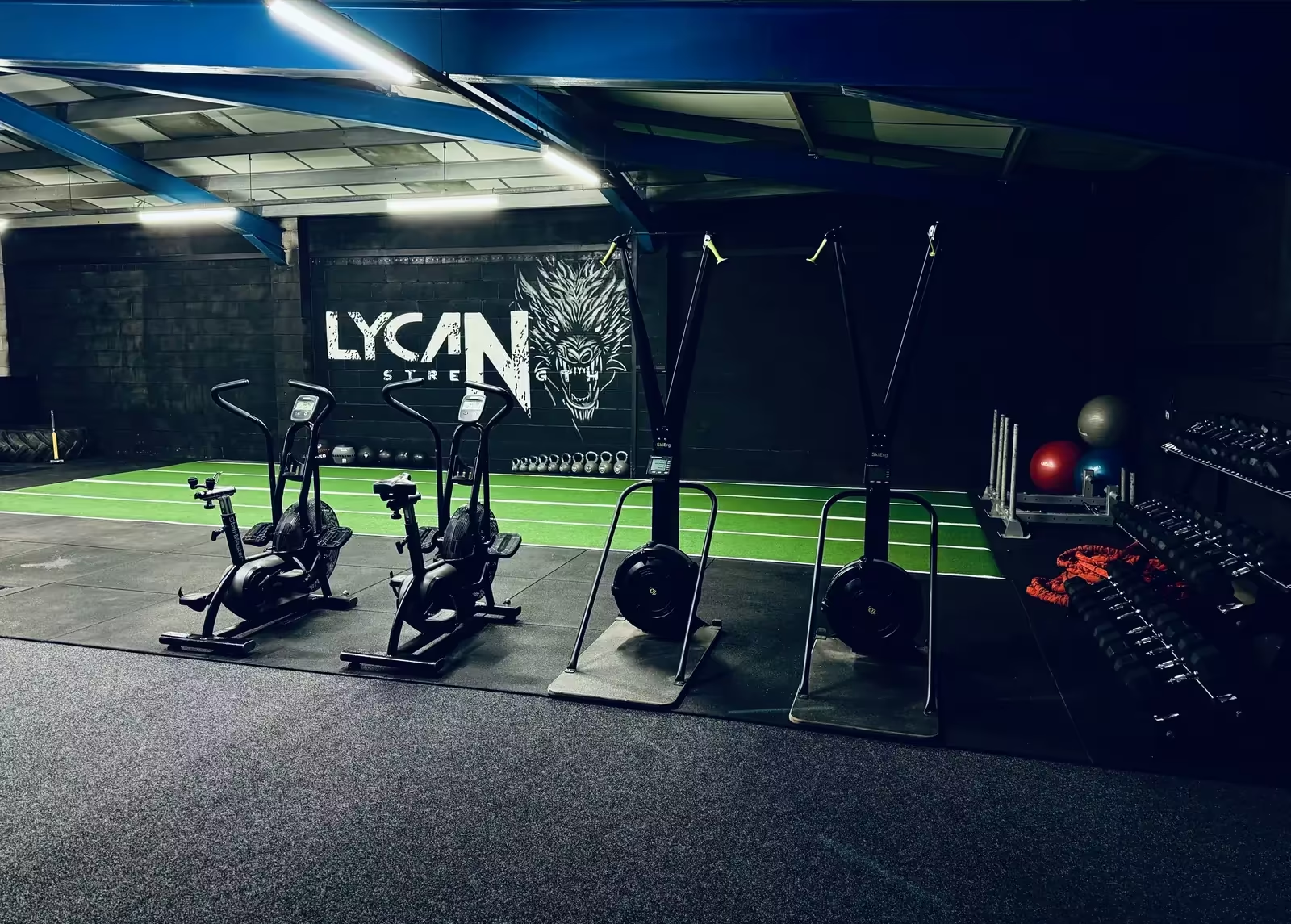
- Cycling: a static bike or air bike lets you work hard with little impact. Set the seat so your knee is only slightly bent at the bottom of the pedal stroke. See the air bike guide.
- Rowing: usually well tolerated if you avoid sliding too far forward into a deep knee bend at the start of each stroke.
- Swimming and aqua classes: water takes much of your body weight off the joints.
- Walking: often fine on flat ground at a comfortable pace. Build distance gradually, and use walking poles on hills if they help.
- SkiErg: mostly upper body and trunk, with little knee involvement.
Whatever you choose, start with shorter sessions than you think you need, perhaps 10 to 15 minutes, and build by a few minutes a week. Knees tend to tolerate a gradual increase far better than a sudden jump. Running, jumping and repeated deep squats can come later, once strength has improved and symptoms have settled.
Strength training for sore knees
Strengthening the muscles around the knee and hip is one of the most effective things you can do. Start in ranges that feel comfortable and build up gradually.
- Box squats or sit-to-stands to a height that feels OK, lowering the box over time.
- Glute bridges and hip thrusts to strengthen the hips without loading the knee much.
- Step-ups onto a low step, increasing the height as you get stronger.
- Leg press through a comfortable range of movement.
- Hamstring curls and Romanian deadlifts for the back of the thigh.
- Calf raises, plus side-lying leg raises or banded side steps for the hips.
Two or three sessions a week is a good target. In a scalable class, a coach can swap movements for you, such as a box squat in place of a deep back squat, or a step-up instead of a walking lunge. Slow, controlled lowering is often more comfortable than fast, bouncy reps, and it builds strength well.
Using a simple pain rule
Many physiotherapists use a traffic light approach to exercise with knee pain. Rate your pain from 0 to 10:
- Green (0 to 3): fine to continue.
- Amber (4 to 5): acceptable during exercise if it settles back to your usual level within 24 hours. Keep the load the same next time.
- Red (6 or more), or pain that is worse the next day: reduce the load, range or volume next time.
When to get help
See your GP or a physiotherapist if knee pain is not improving after a few weeks, keeps coming back or stops you doing everyday things. A physio assessment looks at how the knee moves, your strength, your walking and how you load the joint, then builds a plan around what it finds.
Get urgent medical help (call NHS 111, or go to A&E where appropriate) if:
- The knee is hot, red and swollen, especially if you feel unwell or have a fever.
- You cannot put weight on the leg after an injury.
- The knee locks, repeatedly gives way, or you felt a pop followed by rapid swelling.
- The knee looks deformed after an injury.
- You have calf pain and swelling, especially after surgery, a long journey or a spell of immobility, which can be a sign of a blood clot.
Lycan Strength has on-site physiotherapy that treats sports injuries and muscle and joint pain, starting with a full assessment on the first visit, and members get 20% off treatment.
A realistic starting week
Try this: three short sessions of cycling or rowing at an easy to moderate pace, two strength sessions using the exercises above, and daily walks at a comfortable distance. Keep a moderate calorie deficit and high protein. Review after two weeks, then build up slowly.
For more on specific knee conditions, see knee osteoarthritis and runner's knee. Both respond well to the same principles: gradual loading, stronger muscles and a healthy weight.
Members' guide
Keep reading with your free week
The full guide is for members and people on a free trial. Claim 7 days free and it opens straight away on this device, along with every other guide.
Already a member? Log in to read it
Unlock the full guide
Seven days of classes, free. We will be in touch to book your first session.
Questions
Will losing weight help my knee pain?
For most people carrying extra weight, yes. Less weight means less load on the knee, and research shows even modest weight loss can reduce pain.
What is the best cardio for bad knees?
Cycling, rowing, swimming and walking on flat ground are usually well tolerated. Build up gradually.
Should I stop exercising if my knee hurts?
Not necessarily. Mild pain that settles within 24 hours is often fine. Sharp, worsening or next-day pain means reduce the load and get it assessed.
Can I squat with knee pain?
Often yes, to a comfortable depth, such as a box squat. A physio or coach can help you find a version that works.
General guidance for healthy adults. If you have a medical condition, injury or are pregnant, check with a health professional before changing your training or diet.
