
- Build towards 150 minutes of moderate activity a week, not from day one
- Most cardio should be at a pace where you can still talk
- Walking, rowing and cycling are ideal low-impact starting points
- Increase time before intensity, and add hard intervals later
What cardio is and why it matters
Cardio, short for cardiovascular exercise, is any sustained activity that raises your heart rate and breathing: walking, cycling, rowing, running, swimming and so on. It strengthens your heart and lungs, improves how your body uses oxygen and fuel, and is strongly linked with a lower risk of heart disease, type 2 diabetes and many other conditions.
It also makes everyday life easier. Better cardiovascular fitness means stairs, hills, playing with children and long days on your feet all cost you less. It helps your strength training too, because you recover faster between sets and between sessions.
The UK Chief Medical Officers recommend at least 150 minutes of moderate activity or 75 minutes of vigorous activity a week, alongside strength work on two days. For a beginner, that 150 minutes is a destination to work towards over a couple of months, not a starting point.
How hard should it feel?
The talk test is the simplest guide, and it works without any gadgets:
- Easy: you can hold a full conversation. Breathing is a little quicker than normal.
- Moderate: you can talk in short sentences but would not want to sing. Most beginner cardio should sit here or below.
- Hard: you can manage only a few words at a time.
- Very hard: no talking at all. Sustainable for seconds or a minute or two.
Many beginners go too hard, too often. They finish every session gasping and dread the next one. Most well-built cardio programmes put the majority of time at easy to moderate effort, with a small amount of harder work. If you like data, heart rate zones do the same job, and our guide to heart rate training explains them clearly.
The best machines and activities to start with
- Walking: free, low impact and easy to fit in. Brisk walking counts as moderate activity, and hills add extra effort.
- Rowing machine: full body and low impact. Technique matters, so see our rowing machine guide.
- Bike: easy on the joints and simple to control. The air bike is also good, though it gets hard very quickly if you push.
- Cross-trainer: low impact and familiar to most people.
- Swimming: excellent for anyone with joint pain, if you are comfortable in the water.
- Running: brilliant, but higher impact. Build up gradually, ideally with a walk-run plan such as the NHS Couch to 5K.
Choose what you enjoy and can get to easily. Rotating between two or three options spreads the load around your body, keeps things interesting and gives you a backup when one option is not available.
A simple eight-week plan
- Weeks 1 and 2: three sessions of 15 to 20 minutes at an easy to moderate pace. Brisk walking counts.
- Weeks 3 and 4: three sessions of 20 to 25 minutes, mostly at a moderate pace.
- Weeks 5 and 6: three sessions of 25 to 30 minutes. In one of them, add four to six 30-second efforts at a hard pace, with 90 seconds easy between each.
- Weeks 7 and 8: two sessions of 30 to 40 minutes at a moderate pace, plus one interval session.
Add daily walking on top, and pair this with two strength sessions a week. By week eight you will be close to or past the UK guideline of 150 minutes, and clearly fitter than when you started.
Keeping cardio from getting boring
Plenty of beginners give up on cardio because twenty minutes staring at a wall on a cross-trainer feels endless. Boredom is a real barrier, so plan around it. Take easy sessions outside when the weather allows: a brisk walk along a canal towpath or round a local park feels very different from the same effort indoors.
Indoors, change machines every ten minutes, listen to a podcast saved for cardio sessions only, or set small targets such as a slightly faster last five minutes. Training with a friend at a conversational pace also works, because the talk test takes care of itself.
Cardio, strength and fat loss
Cardio is great for your heart and uses energy, but it is not the whole answer for fat loss. Strength training builds and protects muscle, and your diet drives most of the change on the scales. For most people the best results come from combining the two. Our guide to cardio vs weights for fat loss weighs them up honestly.
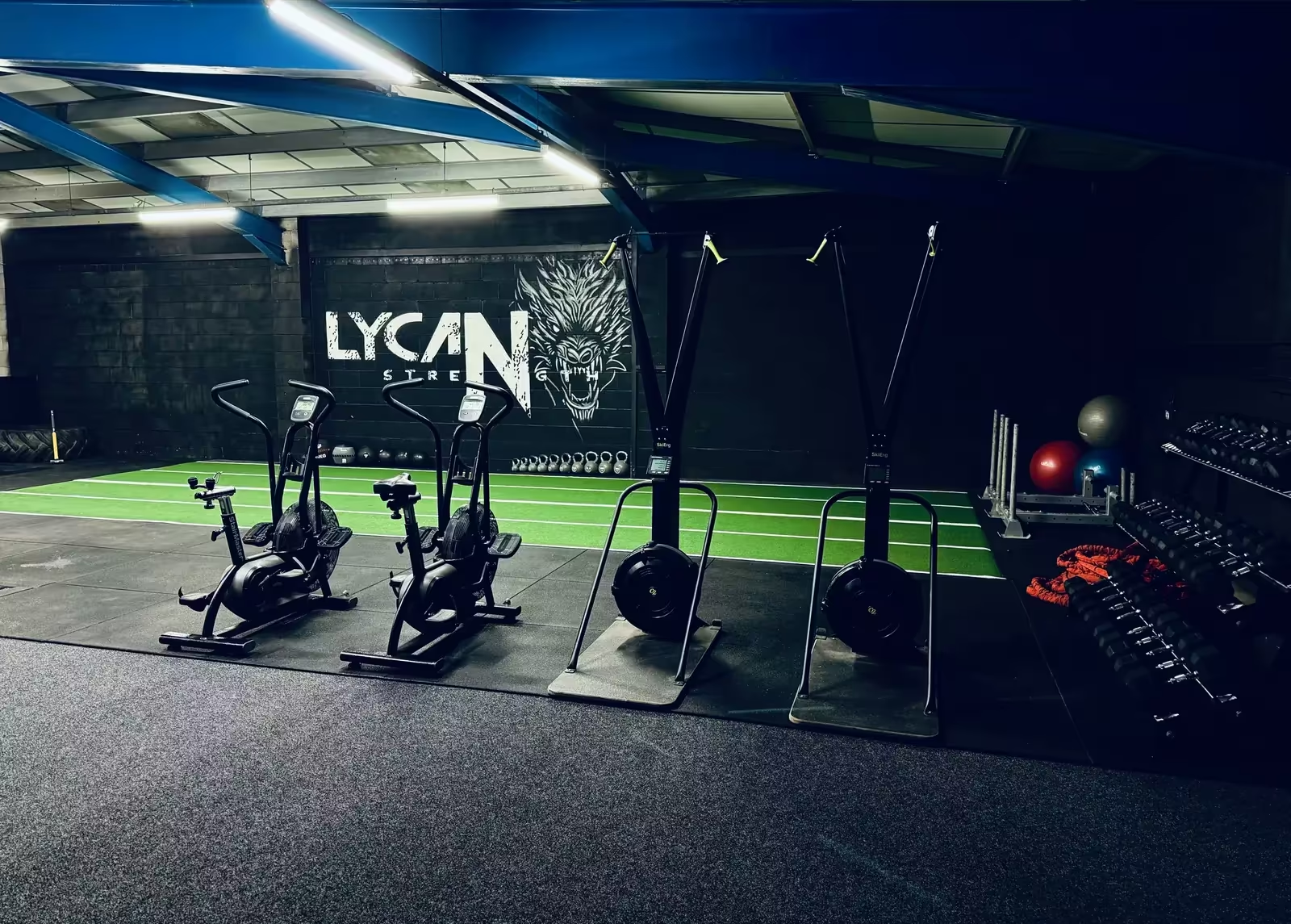
Conditioning classes are another way to get your cardio, with the planning and pacing guidance done for you. Our guide to conditioning classes explains the common formats. At Lycan Strength, Engine classes are designed to 'build lasting cardiovascular health' and are scalable to your level.
If you are doing both cardio and strength in the same session, lift first while you are fresh, then do your cardio. If they are on separate days, try not to put a hard interval session the day before a heavy leg session.
Stay safe as you build
Some breathlessness is the whole point of cardio, but certain symptoms are not normal. Stop and get medical advice if you experience chest pain or tightness, dizziness or faintness, palpitations that do not settle, or breathlessness far out of proportion to the effort. Call 999 if chest pain is severe or does not ease with rest.
If you have asthma, keep your reliever inhaler with you and warm up gradually. If you have a heart or lung condition or diabetes, or have not exercised for many years, check with your GP before starting. For most people, though, easy cardio is one of the safest and most beneficial things you can do for your health.
Members' guide
Keep reading with your free week
The full guide is for members and people on a free trial. Claim 7 days free and it opens straight away on this device, along with every other guide.
Already a member? Log in to read it
Unlock the full guide
Seven days of classes, free. We will be in touch to book your first session.
Questions
How much cardio should a beginner do?
Start with two or three sessions of 15 to 20 minutes a week at a comfortable pace, and build gradually towards 150 minutes of moderate activity a week.
What is the best cardio machine for beginners?
The rowing machine, bike and cross-trainer are all low impact and easy to control. Walking is just as valid and needs no equipment.
Is walking enough cardio?
Brisk walking counts as moderate activity, so it can meet the UK guidelines on its own. Adding hills or some harder efforts later helps fitness keep improving.
Should I do cardio before or after weights?
If both are in one session, do the weights first while you are fresh, unless your main goal is endurance.
General guidance for healthy adults. If you have a medical condition, injury or are pregnant, check with a health professional before changing your training or diet.