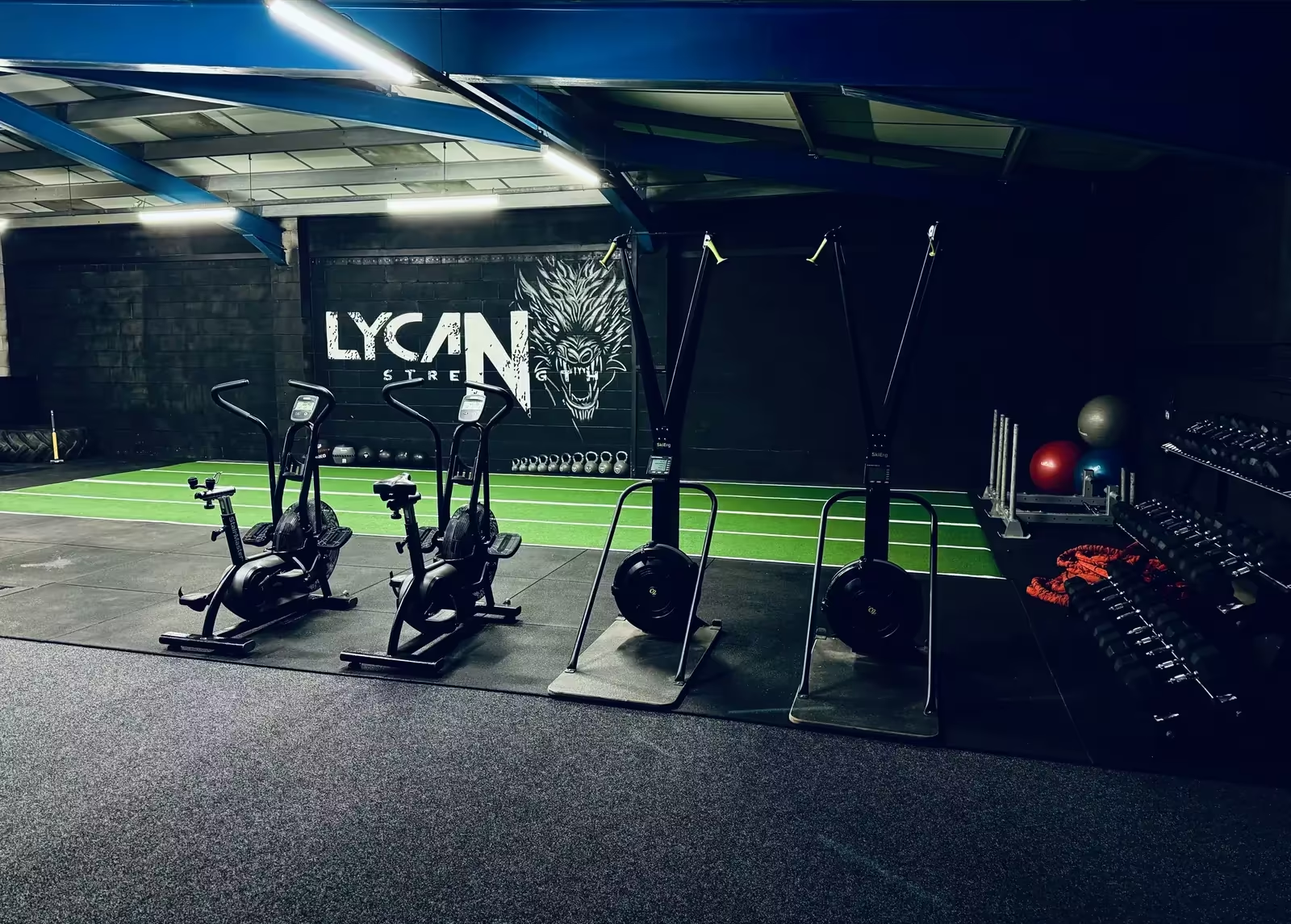

- Most strength classes run warm-up, main lift, accessories, then a finisher
- You choose the weight for you, guided by the coach and the target effort
- Resting between heavy sets is normal and part of the training
- Write down what you lift so you can build on it next time
The typical shape of a session
Every gym and coach runs things a little differently, but most well-run strength classes follow a similar shape. Knowing it in advance takes a lot of the nerves out of a first visit, because you always know what is coming next.
- Briefing: the coach explains the session, the main lift and the key points to focus on.
- Warm-up: general movement to raise your temperature, then drills specific to the day's lifts.
- Main lift: one or two big movements, such as a squat, deadlift, press or pull, built up over several sets.
- Accessory work: supporting exercises for the same muscles, often in pairs or small circuits.
- Finisher or core: sometimes a short conditioning piece or some core work.
- Cool-down and notes: a few minutes to bring your breathing down and record what you lifted.
Different class types shift the emphasis. A lower body day centres on squats, hinges and lunges, and an upper body day on presses, rows and pull-ups. Power-focused sessions add faster, explosive movements such as jumps, throws or kettlebell swings, which we explain in power training explained.
The warm-up: rehearsal, not a workout
The warm-up in a strength class is usually less about sweating and more about preparation. After a few minutes of rowing, cycling or bodyweight movement, you will typically move into drills that mirror the main lift: goblet squats before back squats, hip hinges before deadlifts, band work before presses.
Then come the build-up sets. You start the main lift with an empty bar or a light weight and add weight gradually over several sets before reaching your working weight. This is where a coach gets a good look at how you move and can adjust your setup before anything gets heavy. Our guide on how to warm up for lifting explains the logic.
The main lift: how weights are chosen
This is the heart of the session. The plan might say something like 5 sets of 5 reps, or build to a heavy set of 3. It will rarely give a specific weight, because everyone in the room is different. Instead, you choose a weight that matches the target effort.
Coaches often use a scale of effort or reps in reserve. A set described as two reps in reserve means you should finish feeling you could have done two more with good technique. As a beginner, err on the lighter side. A coach can always suggest adding weight, and taking it off halfway through a set is far less fun.
You will rest between sets, often two minutes or more for heavy lifts. It can feel like standing around, but it lets you lift with quality on every set. Use the time to breathe, sip water and help a training partner load their bar. Our guide to rest between sets explains why it matters.
Accessories, finishers and the rest of the class
After the main lift, most classes move on to accessory exercises: lunges, split squats, rows, dumbbell presses, hamstring work or core exercises. These build the muscles that support the big lifts and address common weak points. They are usually lighter, done for more reps and often paired to keep the session moving.
Some sessions finish with a short conditioning piece, perhaps a few minutes on a rower or a couple of rounds of carries, or with core work like planks and dead bugs. If you are new, take these at a steady pace. The strength work is the main event, and there is no prize for collapsing at the end.
What the coach is looking for
A good strength coach spends most of the class moving around the room. They are watching the basics: foot position, bar path, depth, whether your back stays in a strong position and whether your knees track in line with your toes. Most corrections are small and quick, and they are a sign of attention, not criticism.
They will also check the weight. Too light and you are wasting the session; too heavy and technique breaks down. Expect them to suggest adding or removing a little. They should also offer an easier version of any movement that does not suit you today.
Tell the coach before the session about injuries, pain or anything you are unsure of. It is much easier to plan around a sore shoulder before the pressing starts than halfway through it.
Getting the most from strength classes
Consistency matters more than any single class. Two strength sessions a week, one lower body and one upper body, is enough for a beginner to make steady progress for months. Our guide to the upper/lower split shows how that works across a week.
Record your weights every time. Next week, when the same lift comes round, you will know exactly where to start and can aim to add a little. That simple habit is what turns classes from exercise into training.
Wear flat, stable trainers rather than thick running shoes, bring a water bottle and a small towel, and dress in something that lets you squat deeply and lift your arms overhead. Arrive a few minutes early for your first few classes so you can tell the coach you are new and have a quick look at the equipment before the session starts.
At Lycan Strength, the strength classes are Full Body, Upper and Lower, and every class is scalable to the person, so beginners can learn to lift properly from the first session. The timetable shows when each one runs.
Members' guide
Keep reading with your free week
The full guide is for members and people on a free trial. Claim 7 days free and it opens straight away on this device, along with every other guide.
Already a member? Log in to read it
Unlock the full guide
Seven days of classes, free. We will be in touch to book your first session.
Questions
Do I need to know how to lift before joining a strength class?
No. A well-run class teaches the lifts and offers easier versions. Tell the coach you are new so they can keep a closer eye on your technique.
How heavy should I lift in my first strength class?
Lighter than you think. Aim to finish each set feeling you had several good reps left, and let the coach guide you upwards over the following weeks.
Will a strength class make me bulky?
Very unlikely. Building a lot of muscle takes years of focused training and eating. Most people simply become stronger, firmer and more capable.
How many strength classes a week should I do?
Two a week is a great start for beginners, ideally one lower body and one upper body session with a day or more between them.
General guidance for healthy adults. If you have a medical condition, injury or are pregnant, check with a health professional before changing your training or diet.