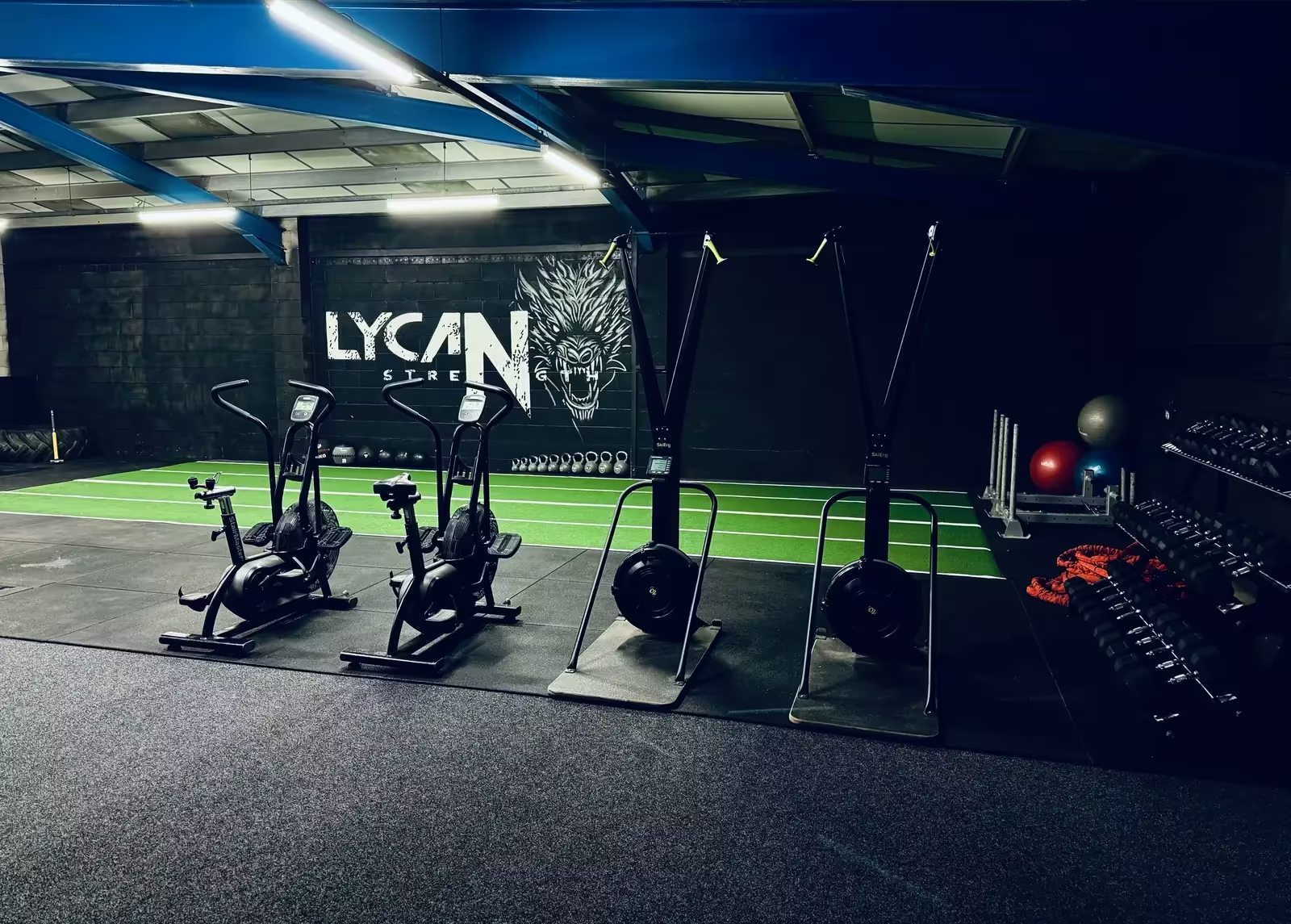

- Classes remove the planning and add coaching, structure and company
- Solo training suits people who want flexibility and already know the basics
- The best option is the one you will actually turn up to
- Many people use classes for learning and solo sessions for extra practice
What you get from a coached class
A well-run class takes three big problems off your plate: what to do, how to do it and whether to bother turning up. The session is planned for you, a coach watches your technique and adjusts it, and a fixed time on a timetable becomes an appointment you are less likely to skip.
Then there is the social side. Training alongside the same faces each week builds a kind of accountability that apps struggle to match. People notice when you are missing, you pick up tips from those a few months ahead of you, and hard sessions feel more manageable when everyone is doing them together.
The quality of classes varies, though, and the difference between a coached class and an instructed workout matters. In a good class the coach knows your name and your injuries, offers easier and harder options for each movement, and corrects form rather than just counting down the clock.
What you get from training on your own
Training solo gives you complete control. You choose the time, the exercises, the pace and the music. If you work shifts, travel a lot or have a specific goal, such as a powerlifting total or a spring marathon, self-directed training lets you follow a plan built exactly around you.
Many people also enjoy it as quiet time: an hour with headphones and no need to talk to anyone. For some, that is the whole appeal of the gym.
The trade-off is that you have to supply everything the class would have provided. You need a sensible plan, the knowledge to perform movements safely, the discipline to progress gradually and the motivation to turn up on a cold Thursday night. Beginners often underestimate how much of that is hard.
An honest comparison
- Learning technique: classes win clearly, as long as the group is small enough for the coach to actually coach.
- Flexibility: solo wins. You can train at 10pm or 5am, for 30 minutes or 90.
- Individual programming: solo wins if you know what you are doing or follow a good programme. Otherwise it can turn into guesswork.
- Motivation and consistency: classes usually win, thanks to set times and familiar faces.
- Confidence: mixed. Some people find a class far less daunting than an empty gym floor, others prefer to learn privately first.
- Cost: varies by gym. Class-based memberships often cost more than a basic gym membership but less than regular one-to-one coaching.
If you want expert eyes on you but dislike groups, a short block of personal training can bridge the gap. We weigh that option up in is personal training worth it?
Who each option suits
Classes tend to suit people who are new or returning after a long break, those who find motivation hard on their own, anyone who likes variety and people who enjoy a bit of company. They also suit people who have tried the gym before and drifted away without quite knowing why.
Training alone tends to suit people who already know the main lifts, those with irregular schedules and anyone following a specific programme for a sport or event. It can also suit people who find groups draining, although many are surprised how quickly a small class starts to feel comfortable.
If you are not sure what a class actually involves, our guides to what happens in a strength class and conditioning classes explained describe the typical structure of each.
The mix most people end up with
Plenty of regular gym-goers end up doing both. A common pattern is two or three classes a week for the coaching, the strength work and the company, plus one solo session for extra practice on a lift, a steady run or some mobility work.
The combination covers most weaknesses. Classes keep technique honest and give you a structure to hang your week on. Solo sessions let you work on what you personally need, such as a weaker side, a stiff upper back or a bit more cardio. For a longer view of what coaching adds over the years, see training with a coach vs training alone.
Questions to ask before you commit to classes
Not every class will suit a beginner, even at a good gym. Before you sign up, it is worth asking a few direct questions. A gym that is confident in its coaching will be happy to answer them.
- How many people are usually in a class, and how many coaches?
- Is there an easier version of every movement, and will the coach show me it?
- Is the class strength-focused, conditioning-focused or a mix?
- Do I need to book, and what happens if I have to cancel?
- Can I use the gym floor on days I am not in a class?
Then watch or try a session. Pay attention to whether the coach moves around the room and talks to people individually, or stays at the front shouting times. The first is coaching. The second is a workout you could have followed on a video at home.
Try both before you decide
The best option is often decided by your week rather than your preferences. If your evenings are unpredictable, fixed class times may be hard to hit and a flexible solo plan might keep you more consistent. If your weeks are regular, booking a class removes the daily decision about whether to go at all.
The only real way to know which suits you is to try both. Go to a few different classes, not just one, and spend a session or two on the gym floor with a written plan. Notice how you feel afterwards and, more importantly, whether you are looking forward to the next one.
At Lycan Strength every class is scalable, with coaches adjusting movements to the person, and the full gym is available as well, so you can test both approaches under one roof. The class timetable shows when each session runs across the week.
Members' guide
Keep reading with your free week
The full guide is for members and people on a free trial. Claim 7 days free and it opens straight away on this device, along with every other guide.
Already a member? Log in to read it
Unlock the full guide
Seven days of classes, free. We will be in touch to book your first session.
Questions
Are group classes good for beginners?
Yes. A well-coached class is one of the best ways to start, because you get a plan, supervision and scaled options without paying for one-to-one coaching.
Will I be able to keep up in a class?
In a properly scaled class you are not meant to keep up with anyone. You work at your own level, with an easier version of any movement where needed.
Can I build muscle with classes alone?
Yes, if the classes include progressive strength work and you attend two or three times a week while eating enough protein. Purely cardio-based classes are less effective for building muscle.
Should I learn on my own before joining a class?
Usually not. Classes are a good place to learn and coaches expect beginners. Teaching yourself first risks building habits that later need unlearning.
General guidance for healthy adults. If you have a medical condition, injury or are pregnant, check with a health professional before changing your training or diet.