
- Age slows recovery a little. Long gaps in training and poor sleep slow it far more.
- Aim for protein at every meal, roughly 0.4 g per kg of body weight per sitting.
- Space your hardest sessions, warm up longer and keep some power work in the plan.
- Keep training hard and lifting heavy. Just manage how often you go all out.
What actually changes
Plenty of people in their forties notice that a hard session hangs around a day longer than it used to. That is real. Muscles recover from very demanding work, particularly high-impact or lowering-heavy sessions, a little more slowly. Tendons and joints are less forgiving of sudden jumps in training. Sleep often becomes lighter and more broken, and life around training tends to be busier than it was at 25.
What changes less than people think is the ability to adapt. Research consistently shows that people in their forties, fifties, sixties and beyond gain strength, muscle and fitness from well-designed training. Much of what gets blamed on age is actually the result of years of doing less, and that part is reversible.
Recovery also becomes more individual. Two 45-year-olds on the same programme can respond very differently depending on training history, sleep, stress and health. That makes paying attention to your own signals more useful than following a blanket rule about age.
The practical shift is not to train softly. It is to be smarter about when you go hard and what surrounds those sessions.
Protein matters more
As we get older, muscles become a bit less responsive to the protein we eat, sometimes called anabolic resistance. The practical answer is to eat a little more protein and spread it well across the day, rather than having a small breakfast, a light lunch and a big dinner.
- Aim for around 1.6 g of protein per kg of body weight per day, with up to 2.2 g if you are training hard or losing fat.
- Get a decent dose at each meal: roughly 0.4 g per kg of body weight, which is around 30 to 40 g for many adults.
- Protein at breakfast is where most people fall short. Eggs, Greek yoghurt, cottage cheese or a shake all help.
- Include a protein-rich meal after training, and consider a slow-digesting option such as Greek yoghurt before bed.
Our guide to how much protein you need turns these numbers into real meals, and the guide to nutrition over 50 covers wider changes such as vitamin D and bone health.
How to adjust your training
- Space the hardest sessions. Leave 48 to 72 hours between your most demanding workouts for the same area.
- Fewer all-out efforts. Test maximal lifts and flat-out time trials less often. Most sessions can finish with a rep or two in reserve.
- Warm up longer. Ten to fifteen minutes, with extra ramp-up sets on heavy days.
- Choose lower-impact conditioning. Sled work, the bike, the rower and the SkiErg build a big engine with less pounding than lots of running.
- Keep some power work. Power tends to decline faster than strength with age, so jumps, throws and fast lifts, scaled sensibly, are worth keeping.
- Build up gradually after breaks. A fortnight away needs a week or two of easier sessions, not a return to your old numbers on day one.
Joint-friendly exercise choices help too. If barbell back squats aggravate your knees, a goblet squat, box squat or trap bar deadlift may let you train just as hard with less irritation. Swapping variations is not going soft. It is choosing the tool that lets you keep training consistently.
Our guides to strength training over 50 and HYROX over 40 go into programme design in more detail.
Sleep and stress in midlife
Midlife often brings the most demanding mix of responsibilities: work pressure, children, ageing parents. Sleep tends to get shorter and lighter at the same time. Since sleep is where much of your recovery happens, this is often the biggest lever you have.
Treat bedtime as part of your training. A consistent wake time, less alcohol, caffeine stopped by early afternoon and a proper wind-down routine will do more for recovery than any supplement. Our guide to sleep for recovery has a practical checklist.
Alcohol deserves a mention here. Many people find its effect on sleep becomes more noticeable with age, and even a couple of drinks can disrupt the second half of the night. If you drink most evenings, cutting back is one of the quickest ways to feel better recovered.
Perimenopause and menopause
For women, the hormonal changes of perimenopause and menopause can affect recovery directly. Common experiences include broken sleep and night sweats, new joint aches, lower energy and changes in body composition. Some women notice they need more time between hard sessions than before.
Strength training becomes more valuable, not less, during this stage. Falling oestrogen affects bone density, and progressive lifting is one of the best ways to protect bone and muscle. If symptoms are disrupting sleep or daily life, speak to your GP about the options, which may include hormone replacement therapy. Our guide to menopause and fat loss covers nutrition and body composition.
What not to change
The biggest mistake people make after 40 is backing off too much. The UK Chief Medical Officers' guidelines recommend muscle-strengthening activity on at least two days a week for all adults, and the benefits for strength, bone density, blood sugar and independence later in life are well established. Lifting heavy, with good technique and sensible progression, is part of that.
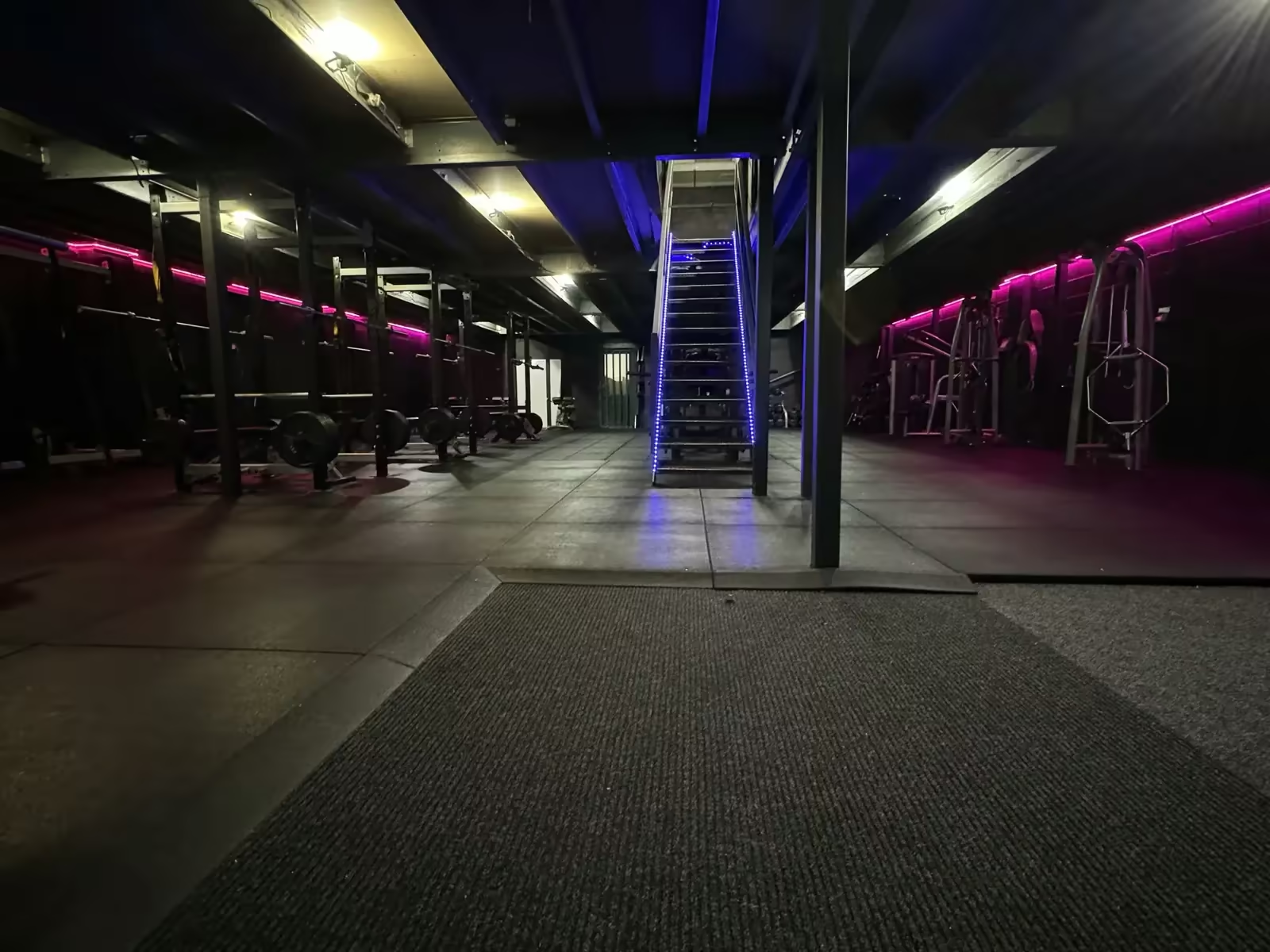
Training alongside people of different ages helps too. At Lycan Strength, members of all ages and levels train together, and every class is scalable, so you can push hard on the days you feel good and dial it back when recovery is lagging.
If you are returning after many years, or have a heart condition, high blood pressure or another long-term health problem, check with your GP before starting a hard programme. Chest pain, unusual breathlessness or dizziness during exercise mean stop and seek help, calling 999 if symptoms are severe.
Members' guide
Keep reading with your free week
The full guide is for members and people on a free trial. Claim 7 days free and it opens straight away on this device, along with every other guide.
Already a member? Log in to read it
Unlock the full guide
Seven days of classes, free. We will be in touch to book your first session.
Questions
Does recovery really slow down after 40?
A little, especially after very hard or high-impact sessions. Much of the difference comes from reduced training, sleep and protein intake, which you can do something about.
How many rest days do I need over 40?
Most people do well with two or three rest or easy days a week, and spacing their hardest sessions 48 to 72 hours apart.
How much protein should I eat over 40?
Around 1.6 g per kg of body weight a day is a good target, with roughly 0.4 g per kg at each meal to make the most of it.
Is it safe to lift heavy weights over 40?
For most healthy people, yes, with good technique and sensible progression. If you have a heart condition or other health concerns, speak to your GP first.
General guidance for healthy adults. If you have a medical condition, injury or are pregnant, check with a health professional before changing your training or diet.