
- UK guidelines recommend muscle strengthening on at least two days a week for all adults.
- Muscle and power decline with age, but both respond well to training at any age.
- Start light, focus on technique and progress gradually over months.
- Include power and balance work, not just slow strength exercises.
Why it matters more after 50
From around middle age, most people gradually lose muscle mass and strength if they do nothing to maintain it, a process called sarcopenia. The rate varies from person to person, but it tends to speed up in later decades and is linked with falls, frailty and loss of independence. Muscle power, the ability to move quickly, drops even faster.
The encouraging part is that muscle keeps responding to training throughout life. Studies of people in their sixties, seventies and beyond show meaningful gains in strength and function from well-designed resistance training. It is never too late to start, and the sooner you start, the more reserve you build.
The UK Chief Medical Officers' guidelines recommend that adults do activities that strengthen the major muscle groups on at least two days a week, alongside 150 minutes of moderate activity. For older adults, they also recommend activities that improve balance and flexibility to reduce the risk of falls.
Strength, not stamina, is often the real limiting factor as we age. Plenty of people who walk every day are still surprised by how hard getting up off the floor has become.
What lifting does beyond muscle
- Bones: progressive loading helps maintain bone density, especially important for women after menopause. See strength training and bone health.
- Blood sugar: muscle is a major user of glucose, and strength training improves insulin sensitivity.
- Joints: stronger muscles around a joint often reduce pain in conditions like knee osteoarthritis.
- Balance and falls: stronger legs and quicker reactions make falls less likely and less serious.
- Mood and sleep: regular training is linked with better mood and sleep at every age.
- Everyday tasks: stairs, shopping, gardening and getting up from the floor all get easier.
Starting safely
If you have a heart condition, high blood pressure that is not well controlled, recent surgery, or symptoms such as chest pain or dizziness during exercise, speak to your GP before starting. For most people, though, well-supervised strength training is very safe, and the risks of staying inactive are far greater.
Start with loads that feel comfortably manageable for 10 to 15 reps with good control, and spend the first few weeks learning the movements rather than pushing hard. A good beginner plan covers:
- A squat pattern, such as a box squat or goblet squat.
- A hinge, such as a kettlebell deadlift.
- A push, such as incline push-ups or a dumbbell press.
- A pull, such as a seated row or lat pulldown.
- A carry, such as a farmers carry with light dumbbells.
- Balance work, such as single leg stands or step-ups.
Machines can be a useful starting point because they guide the movement, but free weights and bodyweight work build more of the balance and coordination you need in daily life. If you are brand new to the gym, our guide to starting the gym over 50 covers the first few weeks.
Progressing and working hard enough
Once technique is solid, the weights need to go up. A common mistake is staying with the same light weights for years. Muscle and bone respond to challenge, so after the first month or two most sets should feel genuinely hard, finishing two or three reps short of failure. Moderately heavy weights for sets of 6 to 10 are perfectly appropriate for most healthy older adults with good technique.
Add a little power too. That can be as simple as standing up quickly from a chair or box, doing brisk step-ups or throwing a light medicine ball. Move fast on the way up and under control on the way down.
Balance deserves its own place as well. Single leg work, step-ups, walking lunges and standing on one leg while you brush your teeth all train the reactions that prevent falls. Aim to challenge your balance a little in most sessions.
Recovery, joints and niggles
Recovery can take a little longer after 50. Most people do well with two or three sessions a week and at least a day between hard sessions for the same muscles. Sleep, protein and daily movement matter far more than supplements. Protein needs may be slightly higher in older adults, and spreading 25 to 40 g across each main meal is a practical target. Our guide to nutrition over 50 explains more.
Some joint stiffness at the start of a session is normal and usually eases as you warm up, so allow ten minutes or so and include the joints you know are stiff. Pain that is sharp, gets worse through a session or lingers into the next day is a sign to adjust: swap the exercise, reduce the range or load, and get it checked if it persists. See recovery over 40 for more.
Training with others
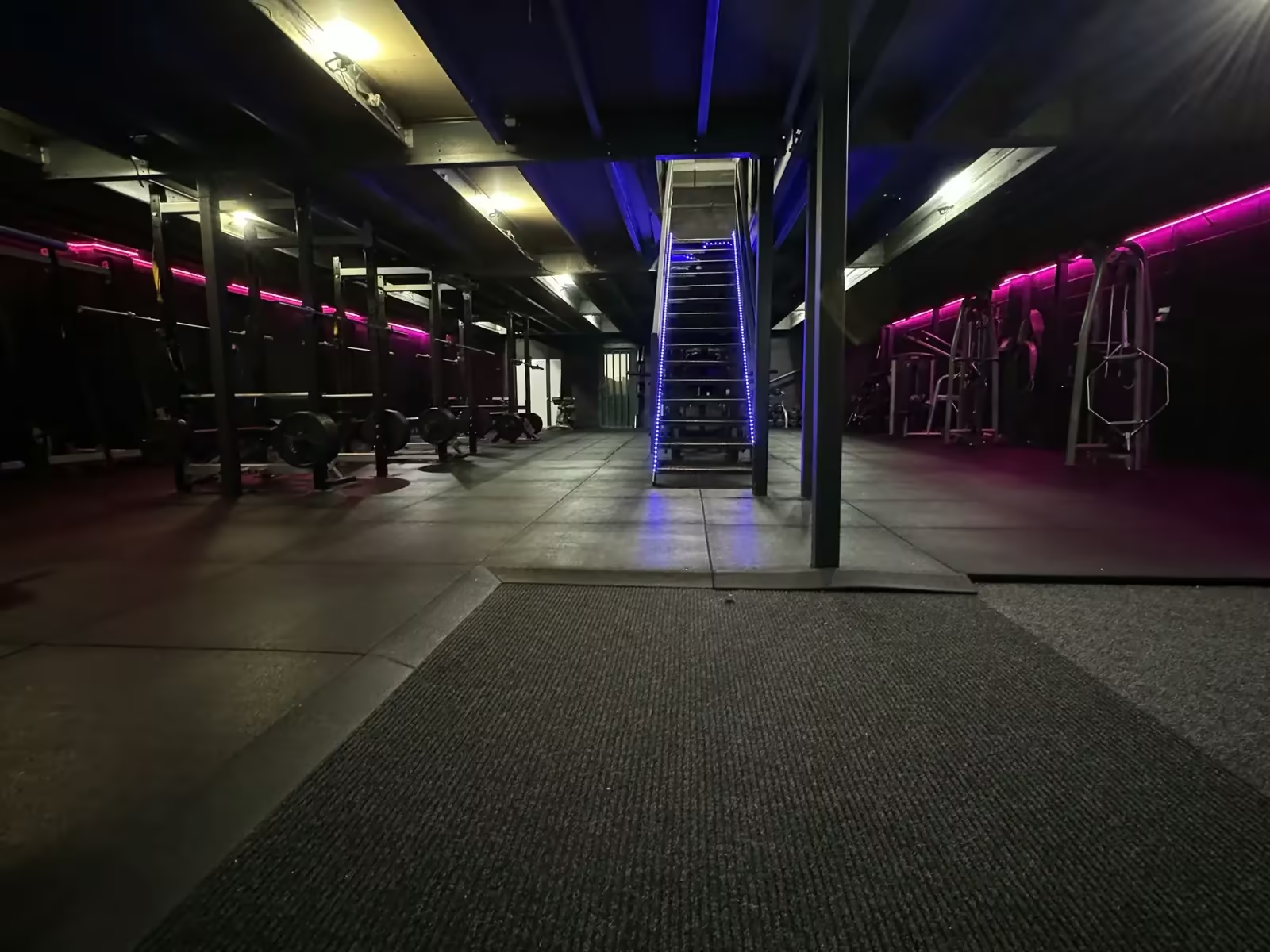
Many people over 50 find they stick with training far better in a group, with a coach to adjust movements and a community to turn up for. At Lycan Strength, members of all ages and levels train together, every class is scalable, and on-site physiotherapy is there for anyone managing an old injury or a joint that needs extra care. The 7-day free trial includes a complimentary fitness assessment.
Whatever route you choose, the most important thing is to start and keep going. A modest plan followed for years beats an ambitious one abandoned after a month. The social side matters more than people expect, too: turning up because others expect to see you is a powerful habit at any age.
Members' guide
Keep reading with your free week
The full guide is for members and people on a free trial. Claim 7 days free and it opens straight away on this device, along with every other guide.
Already a member? Log in to read it
Unlock the full guide
Seven days of classes, free. We will be in touch to book your first session.
Questions
Is it safe to start lifting weights at 50 or 60?
For most people, yes. Start with light loads and good technique, progress gradually, and speak to your GP first if you have heart problems, uncontrolled blood pressure or other significant conditions.
How often should over 50s do strength training?
At least two days a week, in line with the UK guidelines. Two or three sessions of 30 to 60 minutes suits most people.
Should older adults lift heavy weights?
Once technique is solid, moderately heavy weights for 6 to 12 reps are appropriate for most healthy older adults and give the best results for muscle and bone.
Can you build muscle after 60?
Yes. Muscle responds to training at any age, though progress may be slower. Enough protein and consistent training make the biggest difference.
General guidance for healthy adults. If you have a medical condition, injury or are pregnant, check with a health professional before changing your training or diet.