- Aim for 7 to 9 hours a night, and keep wake-up times roughly the same, weekends included.
- Short sleep makes training feel harder, raises pain sensitivity and pushes appetite up.
- For 6am classes, work backwards from your alarm rather than hoping to fall asleep early.
- Loud snoring with gasping or constant daytime sleepiness is worth raising with your GP.
Why sleep is the recovery tool that actually works
Training is the stimulus. Recovery is where the adaptation happens, and much of that happens while you are asleep. Deep sleep is when a large share of growth hormone is released, tissue repair ramps up and the nervous system settles. Sleep also helps you consolidate new movement skills, which is part of why a lift that felt clumsy on Monday can feel smoother by Thursday.
The flip side is well established. Research consistently shows that short or broken sleep makes the same session feel harder, lowers mood and motivation, and increases sensitivity to pain. It also nudges appetite hormones in the wrong direction, so you tend to want more food, especially sugary and salty snacks. If you are trying to lose fat as well as recover, our guide to sleep and fat loss covers that side.
One bad night will not ruin anything. The body copes well with the odd late one, and you can still train well the next day. A run of five-hour nights, week after week, will quietly cap your progress however well you train and eat, and it tends to show up as nagging aches, stalled lifts and a shorter fuse.
How much do you need?
The NHS says most adults need between 7 and 9 hours a night. People training four or five times a week, or preparing for something demanding like a HYROX race, generally do better towards the upper end. A simple test: if you need an alarm every day, crash at weekends, and feel foggy by mid-afternoon, you are probably not getting enough.
Consistency matters almost as much as total hours. Going to bed at 10pm on weeknights and 2am on Saturday is a bit like flying to another time zone every weekend. Keeping your wake-up time within about an hour across the week is one of the most effective changes you can make, and it costs nothing.
Naps can help, particularly for shift workers and new parents. Keep them to around 20 to 30 minutes, or a full 90 minutes if you have the time, and avoid late afternoon naps if they stop you sleeping at night.
Making early morning training work
A 6am class is a great habit for many people: it is done before work gets in the way. The catch is that it only works if you move bedtime earlier, not just the alarm. If you need to be up at 5:15, a 7.5 to 8 hour night means lights out somewhere around 9:30 to 10pm.
Most people cannot simply decide to fall asleep an hour earlier. Shift gradually, by 15 minutes every few nights, and get daylight soon after waking to help reset your body clock. On early days, keep the session honest but not heroic: your body temperature and joint stiffness are different at 6am, so give yourself a thorough warm-up.
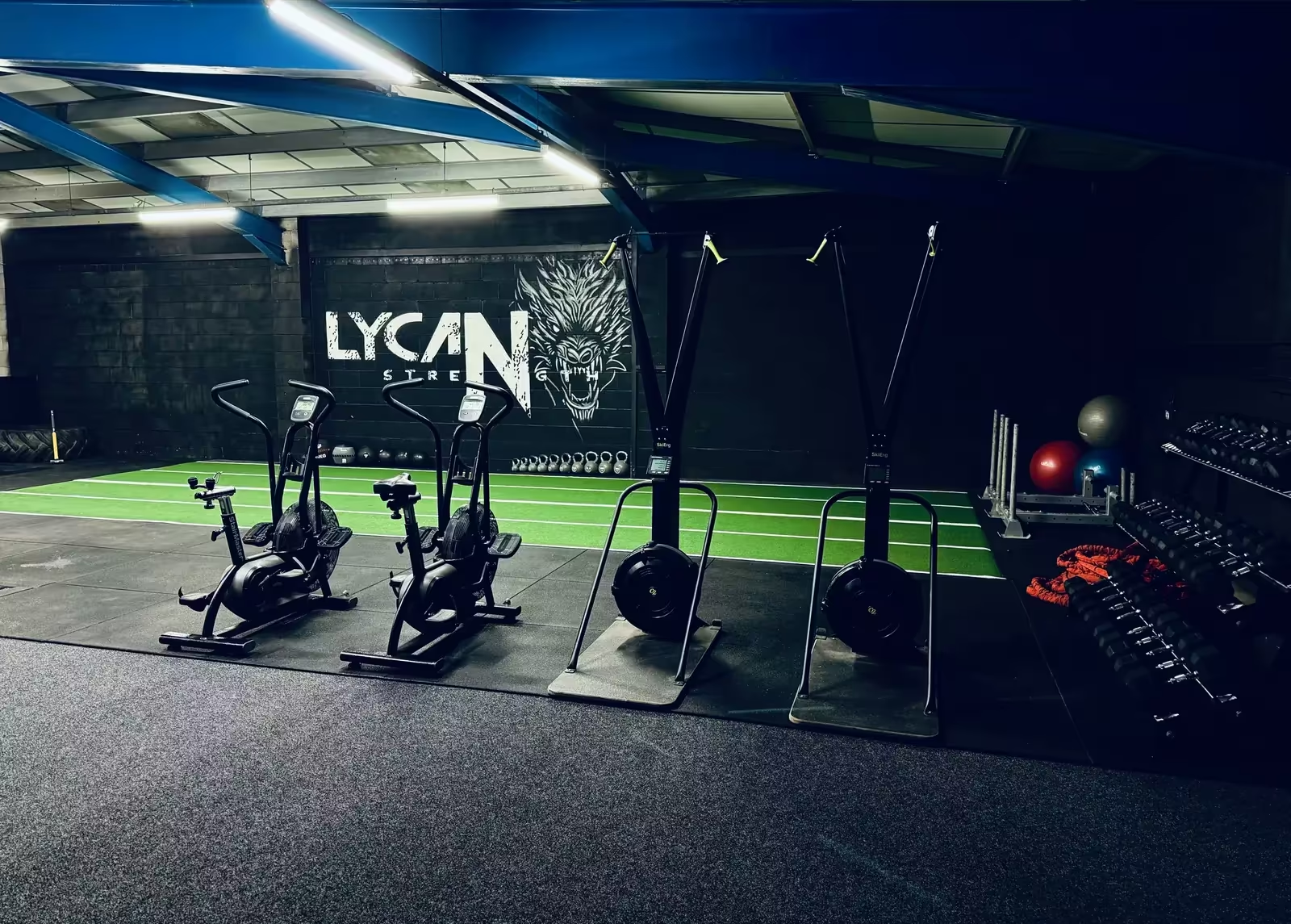
Lycan Strength runs early sessions on Monday, Wednesday, Thursday and Friday, and evening classes every weekday, so you can pick the slot that suits your sleep rather than fighting it. The class timetable lays out the options, and our guide to morning versus evening workouts helps you choose.
Training late and still sleeping well
Evening sessions do not ruin sleep for most people. Some find a hard session within an hour or two of bed leaves them wired, and that is worth noticing rather than assuming. Easing the wind-down usually fixes it.
- Finish with five minutes of easy movement and slow breathing rather than walking straight out after the last interval.
- Eat a proper meal afterwards. Going to bed hungry after a 7pm session is a common cause of broken sleep.
- Take a warm shower, then keep the bedroom cool, dark and quiet.
- Watch the pre-workout. Many contain as much caffeine as two or three coffees.
Caffeine is the big one. Its half-life is roughly five hours on average, with wide variation between people, so a large coffee at 4pm can still be affecting you at bedtime even if you fall asleep fine. Our guide to caffeine and training has sensible cut-off times.
A simple sleep checklist
- Pick a fixed wake-up time and keep it within an hour, seven days a week.
- Get outside for daylight in the first hour after waking, even on grey Manchester mornings.
- Stop caffeine by early afternoon.
- Keep alcohol to a minimum. It helps you drop off but fragments sleep in the second half of the night.
- Have a wind-down routine of 20 to 30 minutes: lights low, screens away, the same steps each night.
- Keep the bedroom cool, dark and for sleep, not for scrolling.
- If you cannot sleep after about 20 minutes, get up, do something calm in dim light, then go back to bed.
When it is more than habits
Sometimes poor sleep is not about routine. Loud snoring with pauses in breathing or gasping, waking unrefreshed, and heavy daytime sleepiness can point to obstructive sleep apnoea, which is common and treatable. Long-running insomnia, where you struggle to get or stay asleep on most nights for weeks, is also worth taking to your GP, who can talk you through options including a structured approach called CBT for insomnia.
Shift work and young children are the two situations where tidy sleep advice falls apart. In those seasons, protect what you can: a consistent anchor block of sleep where possible, a nap before a night shift, and lighter training on the days after a rough night. Keep your heaviest lifts and hardest conditioning for the days you are best rested, and accept that progress may be slower for a while. That is not failure, it is sensible programming around real life.
Stress is often the hidden driver. If your mind races at night, the approach in our guide to stress and recovery is a good starting point, alongside cutting back on training intensity until sleep settles.
Members' guide
Keep reading with your free week
The full guide is for members and people on a free trial. Claim 7 days free and it opens straight away on this device, along with every other guide.
Already a member? Log in to read it
Unlock the full guide
Seven days of classes, free. We will be in touch to book your first session.
Questions
How many hours of sleep do I need to build muscle?
Most adults need 7 to 9 hours, and people training hard usually do best near the top of that range. Consistent sleep supports recovery, strength and appetite control far more than any supplement.
Is it bad to train on very little sleep?
One short night is fine for most sessions, though it will feel harder. After several poor nights, keep the session lighter, avoid maximal lifts and prioritise getting to bed early.
Does exercising in the evening stop you sleeping?
For most people, no. If a hard late session leaves you wired, finish with an easy cool-down, eat a proper meal and avoid caffeinated pre-workout.
Are naps good for recovery?
Short naps of 20 to 30 minutes can help, especially if night sleep is limited by shifts or young children. Avoid late afternoon naps if they make it hard to sleep at night.
General guidance for healthy adults. If you have a medical condition, injury or are pregnant, check with a health professional before changing your training or diet.