
- Olympic weightlifting means the snatch and clean and jerk; powerlifting means squat, bench and deadlift.
- Olympic lifts build power, speed and mobility but take longer to learn.
- Powerlifting builds maximal strength and is technically simpler.
- Most gym-goers benefit from elements of both without competing in either.
The two sports in brief
Olympic weightlifting, often just called weightlifting, is the sport you see at the Olympic Games. Lifters perform two lifts: the snatch, where the bar goes from the floor to overhead in one movement, and the clean and jerk, where the bar goes to the shoulders and then overhead. The best successful attempt at each is added together for a total.
Powerlifting tests three lifts: the squat, the bench press and the deadlift. Each lifter gets three attempts at each, and the best of each is added up. Powerlifting is not an Olympic sport, but it has well-established national and international competitions, including in the UK.
Both sports use weight classes and age categories, and both welcome newcomers at local competitions.
The terminology can be confusing. Weightlifting usually refers to the Olympic sport specifically, while lifting weights covers any resistance training. Bodybuilding is a separate sport again, judged on appearance rather than the weight lifted.
What each one demands
Olympic lifts are fast. The bar travels from the floor to overhead in roughly a second, and the lifter has to pull, extend explosively, drop under the bar and catch it, often in a deep squat. That requires power, speed, timing, coordination and a lot of mobility, especially in the ankles, hips, upper back and shoulders.
Powerlifts are slower and heavier. A maximal deadlift can take several seconds to grind up. The movements are technically simpler, although performing them well at maximal weights takes years of practice. They demand maximal force, bracing and the ability to stay tight under very heavy loads.
The overlap is bigger than it looks. Olympic lifters tend to be very strong squatters, particularly in the front squat, because catching heavy cleans depends on it, and many powerlifters use explosive work to improve their speed off the floor.
- Olympic lifting develops: power, speed, coordination, mobility and the athletic ability to move fast.
- Powerlifting develops: maximal strength, muscle mass, bracing and composure under heavy loads.
The learning curve
The biggest practical difference is how long each takes to learn. Most people can learn a safe squat, bench press and deadlift in a few coached sessions and keep refining them for years. The snatch and clean and jerk usually take much longer to perform with reasonable technique, and good coaching is close to essential. Most coaches teach them from the top down, for example learning a clean from the hang before pulling from the floor.
That is why many strength and conditioning coaches use simpler variations of the Olympic lifts, such as the hang clean, power clean and push press, which capture much of the power benefit with less technical demand. Our guide to power training covers other options too.
Equipment and kit
Olympic lifting needs bumper plates that can be dropped safely from overhead, space to drop the bar, and usually weightlifting shoes with a raised heel; our guide to lifting shoes explains why. Powerlifting needs a squat rack, a bench and a stiff barbell, and lifters often use a belt, with flat shoes common for deadlifts.
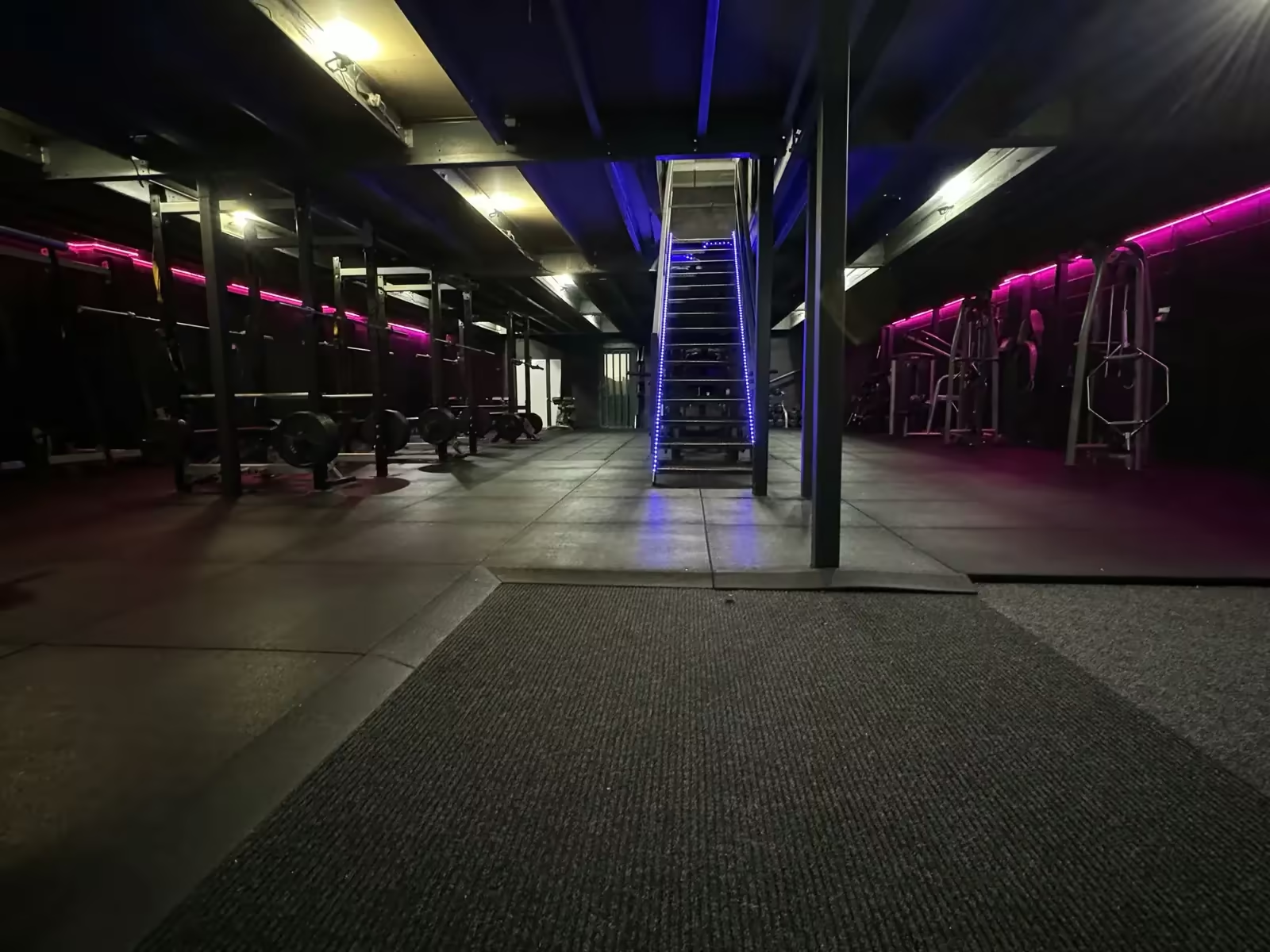
Both are accessible in a well-equipped gym. Lycan Strength has a long rig with squat racks and barbells, which covers the basics of both styles of lifting.
Which suits you?
Think about your goals and your body:
- For raw strength and muscle: powerlifting-style training is hard to beat, and the lifts are easier to learn and progress.
- For sport, speed and jumping: Olympic lift variations and other power work carry over well to sprinting, jumping and changing direction.
- For HYROX and hybrid fitness: a strength base from the powerlifts, plus explosive work like cleans, jumps and kettlebell swings, covers most needs.
- For older lifters or those with limited mobility: powerlifting movements, or variations such as the trap bar deadlift, are often more comfortable, while the full Olympic lifts demand a lot of shoulder and hip mobility.
Body shape plays a small part. Long arms tend to help the deadlift, shorter limbs often suit the squat and bench, and good mobility and coordination help Olympic lifting. But people of every shape succeed in both sports.
Safety and injury risk
Studies of competitive lifters suggest injury rates in both sports are lower than many people assume, and lower than in many popular team sports. Most injuries are gradual overuse problems in the shoulders, lower back, knees and wrists rather than sudden accidents.
The usual causes are too much load too soon, poor technique under fatigue and not enough recovery. Sensible progression, good coaching and taking early niggles seriously keep both sports very manageable. If something persists, a physio who understands lifting can help you keep training while it settles. Warming up properly and rebuilding volume gradually after time off are the two simplest ways to keep shoulders and backs healthy in either sport.
Trying either one
If you are curious, the best first step is to learn the basic lifts from a coach, then decide whether to specialise. The powerlifts, especially the deadlift, squat and bench press, are a great foundation, and a clean variation can be added once you are comfortable with a barbell.
The national governing bodies for both sports in the UK run beginner-friendly local competitions if you ever want to test yourself on a platform. Many lifters find that having a date in the diary is the best motivation there is.
If you want to try both without committing, spend one training block focused on each and see which you enjoy more. Enjoyment predicts how long you will stick with something far better than any theoretical advantage.
Members' guide
Keep reading with your free week
The full guide is for members and people on a free trial. Claim 7 days free and it opens straight away on this device, along with every other guide.
Already a member? Log in to read it
Unlock the full guide
Seven days of classes, free. We will be in touch to book your first session.
Questions
Is Olympic lifting harder than powerlifting?
Technically, yes. The snatch and clean and jerk take much longer to learn. The powerlifts are simpler, although maximal attempts are extremely demanding.
Which is better for building muscle?
Powerlifting-style training generally builds more muscle, because the lifts involve heavier loads, more total volume and slower, harder reps.
Do I need Olympic lifts to be athletic?
No. Jumps, throws, kettlebell swings and simpler clean variations build power well without the full competition lifts.
Can beginners compete in powerlifting?
Yes. Many local competitions welcome novices, and you only need to perform the three lifts to the competition standard.
General guidance for healthy adults. If you have a medical condition, injury or are pregnant, check with a health professional before changing your training or diet.