- No single posture is correct. The best posture is usually your next one.
- Break up sitting every 30 to 60 minutes, even for a minute or two.
- Train upper back, glutes and legs, and keep walking. Do not obsess over fixing posture.
- Pins and needles in the hands or pain spreading down an arm deserve a proper assessment.
The posture myth
Most people who sit at a desk have been told at some point that their posture is bad and that it is the cause of their aches. It is an easy story to believe. The research, however, has not found a strong link between how people sit or stand and whether they get back or neck pain. People with textbook posture get sore backs, and plenty of habitual slouchers never do.
That does not mean posture is irrelevant. Holding any position for hours, upright or slumped, tends to leave you stiff and uncomfortable because the same tissues are loaded the same way for a long time. The problem is stillness, not a particular shape. That is why physios often say the best posture is your next one.
This is worth knowing because the fear around posture can make things worse. People who believe their spine is fragile often move less and brace more, which tends to increase discomfort. Your spine is strong and designed to move in all directions, including bending forward.
Why sitting all day still matters
Even if slouching is not the villain, long periods of sitting do have real downsides. The UK Chief Medical Officers' guidelines advise adults to minimise the time they spend sedentary and to break up long periods of sitting with at least light activity. Long, unbroken sitting is linked with poorer health even in people who exercise.
It also affects how you feel when you train. After eight hours in a chair, hips feel tight, the upper back is stiff and the first few squats of an evening session can feel like someone else's legs. None of that is damage. It is your body adapting to what you do most, and it responds just as quickly to moving more.
Movement snacks through the working day
You do not need a standing desk or a gym break. Short bursts of movement, spread through the day, make a noticeable difference.
- Stand up and move every 30 to 60 minutes, even for a minute or two. Set a reminder if you get absorbed.
- Take phone calls standing or walking.
- Use the stairs, the furthest printer or the kettle on another floor.
- Walk for part of your lunch break. Every step counts, as our guide to steps and NEAT explains.
A two-minute desk reset is also easy to fit in: ten sit-to-stands from your chair, ten slow calf raises, a doorway chest stretch for 30 seconds, and five slow seated twists each way. It is not training, but it breaks the stillness and usually eases stiffness for the next hour.
Setting up your desk sensibly
A comfortable workstation helps, even if there is no perfect set-up. Aim for a screen roughly at eye level and an arm's length away, feet flat on the floor or a footrest, and a chair that supports your lower back. If you work on a laptop for long periods, a separate keyboard and a stand to lift the screen make a big difference.
Standing desks are useful for variety, not as a cure. Standing still all day brings its own aches. The goal is to change position often: sit, stand, perch, walk.
Working from home deserves a mention. The sofa and the kitchen table are where many people's aches start, mostly because they combine a low screen with long, unbroken stretches of work and no walk to the office. If you work from home, build back in the movement your commute used to give you. A short walk before you start and after you finish works well.
Training priorities for desk workers
Rather than trying to correct posture, build a body that tolerates long days well. A balanced strength programme does most of the work, but a few areas deserve extra attention.
- Upper back: rows, pulldowns and face pulls balance out long hours of reaching forward to a keyboard.
- Glutes and hips: hip thrusts, split squats, deadlift variations and step-ups work the muscles that sit idle all day.
- Legs in general: squats, lunges and sled work. Strong legs make getting up, climbing stairs and carrying shopping easier for decades.
- Trunk: carries, dead bugs and side planks build a trunk that copes with load in any position.
- Walking and easy cardio: some of the best medicine for a stiff back.
Our 10-minute mobility routine targets exactly the areas that tighten up with sitting, and works well as a warm-up after work or a reset at lunchtime.
Training after a day at the desk
Evening sessions are when desk workers feel the effects most. Give yourself a longer warm-up, with extra time on hips and upper back, before loading anything heavy. The first set always feels worst, and it improves quickly.
Use the trip to the gym as a transition. Drop your shoulders, take a few slow breaths in the car park, and spend five minutes on hips and upper back once you arrive before the session proper begins.
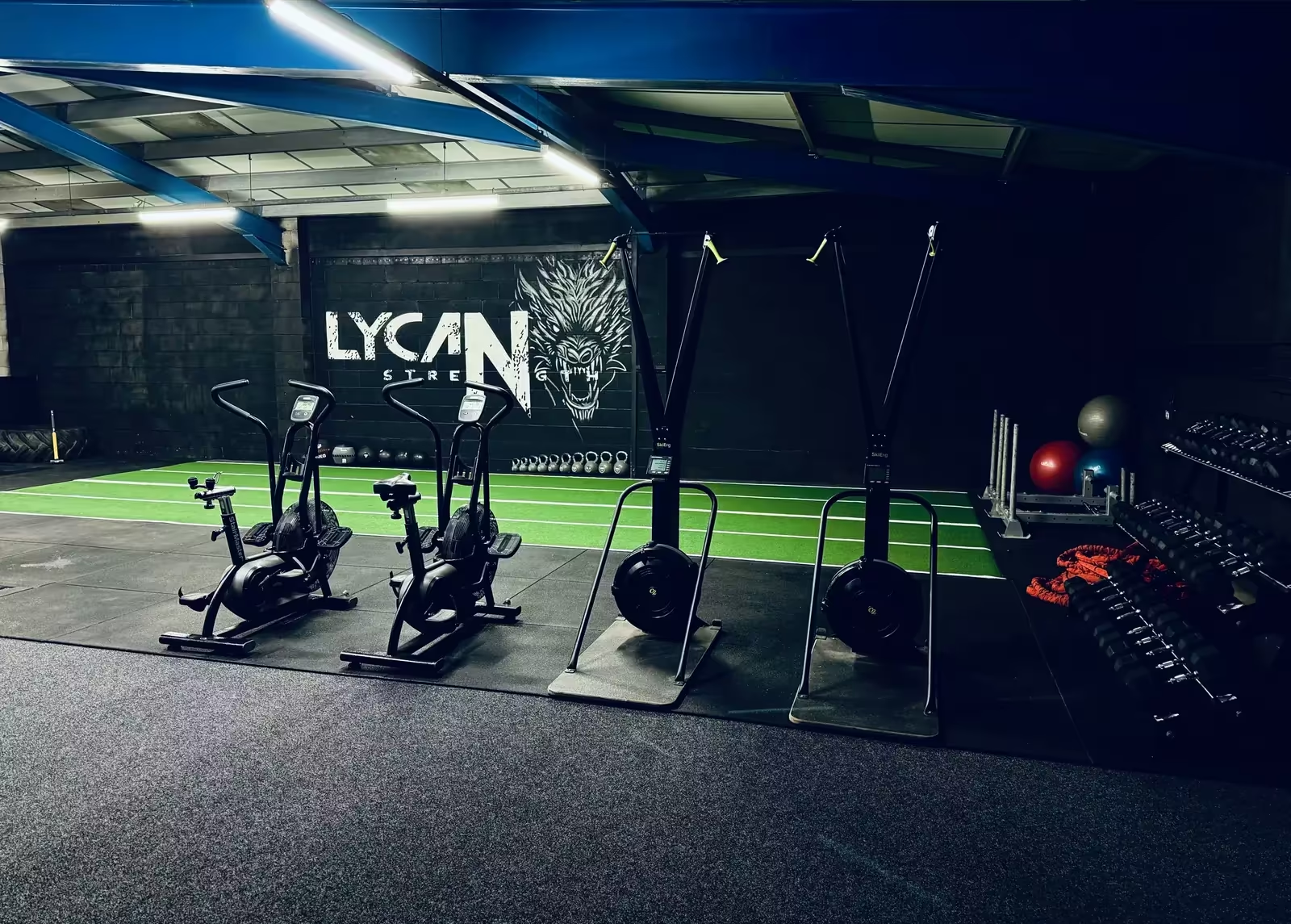
Lycan Strength runs evening classes at 6pm and 7pm Monday to Thursday and 6:30pm on Friday, so there is usually a slot that fits straight after work. Some people prefer a 6am session so the day's sitting comes after the training rather than before it. Try both and see which leaves you feeling better.
When aches need a proper look
Most desk-related aches settle with more movement and sensible training. Get an assessment if pain lasts more than a few weeks despite changes, keeps returning, or is affecting sleep or work. Our guides to postural pain and repetitive strain injury cover the common patterns.
See your GP or a physio promptly for pins and needles or numbness in the hands, pain spreading down an arm or leg, or weakness. For back pain, call 999 or go to A&E if you have numbness around the genitals or buttocks, new bladder or bowel problems, or weakness in both legs.
Members' guide
Keep reading with your free week
The full guide is for members and people on a free trial. Claim 7 days free and it opens straight away on this device, along with every other guide.
Already a member? Log in to read it
Unlock the full guide
Seven days of classes, free. We will be in touch to book your first session.
Questions
Is bad posture the cause of my back pain?
Usually not on its own. Research has not found a strong link between posture and back pain. Staying in any one position for too long is more often the issue, so moving regularly helps more than holding a perfect position.
How often should I get up from my desk?
Every 30 to 60 minutes is a sensible target, even if only for a minute or two.
What exercises are best for people who sit all day?
Rows and face pulls for the upper back, hip thrusts and split squats for the glutes, plenty of leg work, loaded carries and regular walking.
Is a standing desk better than sitting?
Only for variety. Standing still all day has its own problems. Changing position often is what helps.
General guidance for healthy adults. If you have a medical condition, injury or are pregnant, check with a health professional before changing your training or diet.