
- Simulations test pacing, transitions, kit and food, not just fitness.
- Half and mini simulations every two to four weeks are more useful than frequent full ones.
- Do full simulations once or twice, at least ten days before the race.
- Time everything, including transitions, and compare against your plan.
- Recover properly afterwards: a full simulation is close to race-level stress.
What a simulation is for
A simulation is a training session that mirrors all or part of the HYROX race: runs and stations in the race order, at race loads, timed. Its main value is not fitness. You build fitness through your weekly training. A simulation tells you whether you can use that fitness well on race day.
It answers practical questions. Is your planned run pace realistic after the sleds? Do your wall ball sets hold up after the lunges? Does your breakfast sit well? Do your shoes grip on the sled? Where are you losing time in transitions? Better to find out in a Sunday training session than in front of a crowd.
Simulations also build confidence. Having done the second half of the race in training takes a lot of fear out of it.
They are also a good test of kit and food. Wear your race shoes and clothes, eat the breakfast you plan to eat and use any gloves or sleeves you intend to race with. If something rubs, slips or sits badly, you have time to change it.
How often to do them
Simulations are demanding, and full ones are close to race-level stress. Doing them too often leaves you tired and eats into your normal training. A sensible pattern over a 12-week block:
- Mini simulations: every one or two weeks in the build phase, as part of a normal HYROX session.
- Half simulations: every two to four weeks from around week five onwards.
- Full simulation: once, or at most twice, in the final month or so, and at least ten days before the race.
If you are new to HYROX, one full simulation is plenty. Experienced athletes sometimes do two, spaced a couple of weeks apart. Fit them into the structure of a 12-week HYROX training plan rather than adding them on top.
Types of simulation
- Full simulation: all eight runs and stations at race distance and load. The closest you will get to the real thing.
- Front half: runs one to four with the SkiErg, sled push, sled pull and burpee broad jumps. Tests your early pacing and the sleds.
- Back half: runs five to eight with the row, farmers carry, lunges and wall balls. Tests your finish and leg endurance. Often done after a short pre-fatigue.
- Mini simulation: all eight stations with shorter runs, such as 500 m, and reduced station volumes, such as half distance. Great for rehearsing order and transitions without the full cost.
- Station focus: two or three runs and stations around a specific weakness, such as the sleds.
Sample sessions
Mini simulation (about 40 to 50 minutes):
- 500 m run, 500 m SkiErg.
- 500 m run, 25 m sled push.
- 500 m run, 25 m sled pull.
- 500 m run, 40 m burpee broad jumps.
- 500 m run, 500 m row.
- 500 m run, 100 m farmers carry.
- 500 m run, 50 m sandbag lunges.
- 500 m run, 50 wall balls.
Back half with pre-fatigue: 2 km steady run, then 1 km run, 1,000 m row, 1 km run, 200 m farmers carry, 1 km run, 100 m lunges, 1 km run, 100 wall balls. All at race load and planned race pace.
Sled focus: 3 rounds of 1 km run, 50 m sled push, 1 km run, 50 m sled pull, with 4 minutes rest between rounds.
When you do not have all the kit
Not every gym has every piece of equipment, and that is fine. Substitute sensibly, keeping the time and effort roughly similar. A rower or air bike can stand in for the SkiErg, heavy sled work can be replaced by hill sprints in a pinch, and thrusters can replace wall balls. The simulation will be less exact, but it still rehearses pacing, transitions and the feeling of running on tired legs.
If you rely on substitutes, try to get at least one session on the real equipment in the final month, especially for the sleds.
Be careful with the loads you choose. A simulation at much lighter loads than race day gives you false confidence, while one at much heavier loads can leave you slower and more tired than you will be in the race. Match race load as closely as you can.
What to measure and review
A simulation you do not review is just a hard workout. Record:
- Every run split and every station time.
- Transition times, from finishing a run to starting the station and vice versa.
- Heart rate on the first two runs, as a check on early pacing.
- How many rests you took on the wall balls and lunges.
- What you ate beforehand and how your stomach felt.
Afterwards, compare the numbers with your plan, ideally the same day while you still remember how each part felt. Did your runs fade? Which station was slowest compared with your expectations? The guides to HYROX pacing strategy and the Roxzone will help you turn what you find into fixes.
Recovering and fitting them into your week
Treat a full simulation like a mini race. Keep the days either side easy, eat and sleep well, and expect to feel it for a couple of days. Half simulations need a day or so of easy work afterwards. Between simulations, the everyday compromised running sessions keep building the specific fitness.
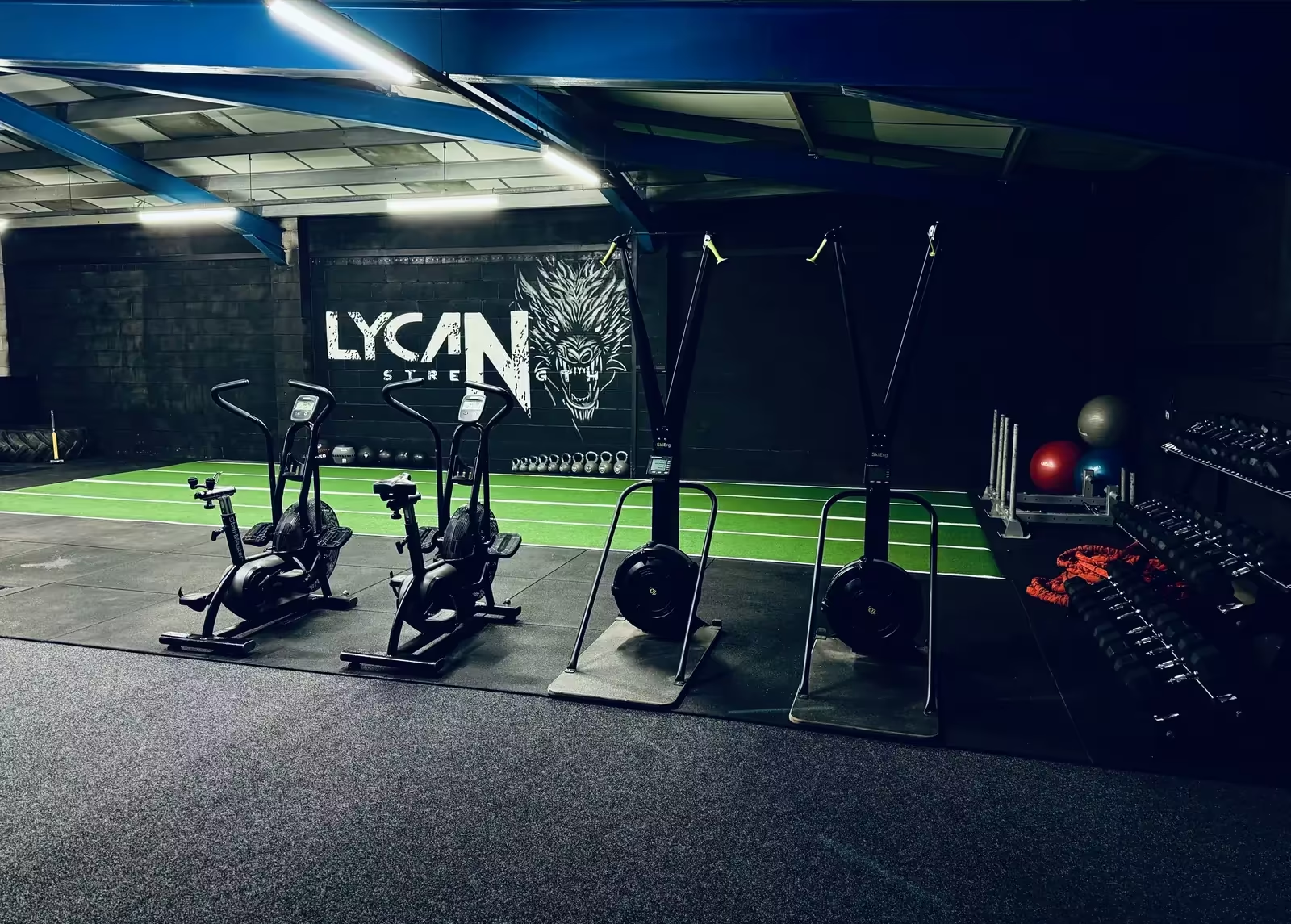
Longer, race-style sessions suit a weekend morning when you are not rushing. There are no classes at Lycan Strength on Saturdays, so it is a natural day for one of your own, and the week's classes are on the timetable.
Members' guide
Keep reading with your free week
The full guide is for members and people on a free trial. Claim 7 days free and it opens straight away on this device, along with every other guide.
Already a member? Log in to read it
Unlock the full guide
Seven days of classes, free. We will be in touch to book your first session.
Questions
How often should I do a full HYROX simulation?
Once, or at most twice, in the final month or so, and at least ten days before the race. Half and mini simulations are more useful for regular practice.
What is a half HYROX simulation?
Either the first four runs and stations or the last four, done in race order at race load. It tests pacing and specific stations without the full recovery cost.
Can I do a HYROX simulation without a sled?
Yes, with substitutes such as hill sprints or heavy resisted walks. Try to practise on a real sled at least a few times before race day.
General guidance for healthy adults. If you have a medical condition, injury or are pregnant, check with a health professional before changing your training or diet.