
- Men tend to store fat around the middle, so track your waist as well as your weight.
- Alcohol and weekend eating undo more male diets than anything else.
- Lift three times a week and eat around 1.6 to 2.2 g of protein per kg.
- Losing excess fat often improves energy, sleep and testosterone levels.
Start with your waist
Men tend to store fat around the middle, and a good share of it is visceral fat packed around the organs. That is the type most strongly linked with type 2 diabetes, heart disease and fatty liver. It is also why a man can look only slightly overweight and still have a health problem brewing.
Grab a tape measure. The NHS says health risks rise when a man's waist is 94 cm or more, and are higher still above 102 cm. A simpler rule from NICE is to keep your waist under half your height, so under 90 cm if you are 180 cm tall. Measure halfway between your bottom rib and the top of your hip bone, after breathing out.
Write that number down. It is a better progress marker than the scales, and it often moves in the right direction even when your weight stalls.
If your waist is over 102 cm, or you have a family history of diabetes or heart disease, ask your GP about a health check that includes blood pressure and blood sugar. In England, the free NHS Health Check is offered every five years to adults aged 40 to 74 who do not already have certain conditions.
The deficit: keep it boring
Work out roughly what you eat to maintain your weight, then eat about 15 to 25% less. For a lot of men that lands somewhere around 2,000 to 2,400 kcal a day. Our guide to working out your maintenance calories shows how to find your own number.
The classic male mistake is going too hard: two shakes and a chicken salad a day, a run every morning, all on top of long working hours. It lasts about ten days, then ends in a Friday takeaway that carries on until Sunday. Aim for 0.5 to 1% of body weight a week instead. Slower, and it sticks.
Liquid calories are the first place to look. Full-sugar fizzy drinks, energy drinks, large lattes and pints all count, and none of them fill you up.
Protein and lifting
Aim for 1.6 to 2.2 g of protein per kg of body weight a day, spread across three or four meals. For a 95 kg man that is roughly 150 to 210 g. If you are carrying a lot of fat, base it on your goal weight instead. Protein keeps you full and protects muscle, which is the difference between getting lean and just getting smaller.
Lift two to four times a week, built around squats, deadlift variations, presses, rows and carries. Keep the weights heavy and add a rep or a little load when you can. Our guide on strength training for fat loss lays out a sample week. Cardio has its place, especially for heart health, but it is not a substitute: the man who only runs while dieting often ends up lighter but still carrying the same soft middle.
Beer, takeaways and weekends
For a lot of men, weekday habits are fine and the weekend is the problem. Four pints on a Friday can easily be 800 kcal or more before the kebab. Add a Saturday takeaway and a big Sunday dinner and the week's deficit has gone.
- Set a drink limit before you go out and stick to it. Alternate with water or an alcohol-free beer.
- Pick lower-strength drinks where you can. A lot of the calories in beer come from the alcohol itself.
- Eat a proper protein-heavy meal before you go out so you are not starving at closing time.
- Choose your takeaway rather than letting it choose you: a grilled chicken kebab with salad over a large doner and chips, or a tandoori dish with plain rice over a creamy curry with naan and sides. Our guide to smarter takeaway choices has plenty more.
None of this means no fun. It means the weekend fits inside the plan rather than blowing it up. Alcohol and fat loss goes into the detail.
Testosterone: the honest version
Plenty of supplements promise to boost testosterone and melt fat. Most do nothing measurable. What is well established is that carrying excess fat, especially around the middle, is associated with lower testosterone, and losing it tends to help. Poor sleep and heavy drinking push levels down too.
If you have symptoms such as persistently low energy, low libido or erection problems, see your GP rather than buying a booster online. A blood test gives you an answer. Many of the causes are treatable, and some, such as type 2 diabetes, are well worth catching early.
A simple plan for a busy week
A realistic week for a man working full time might look like this:
- Three strength sessions, for example Monday, Wednesday and Friday, before or after work.
- A daily target of 8,000 to 10,000 steps, including a walk at lunch.
- Protein at every meal, plus a default breakfast and lunch you do not have to think about.
- Two or three alcohol-free days, and a drink limit on the others.
- At least seven hours of sleep as the target.
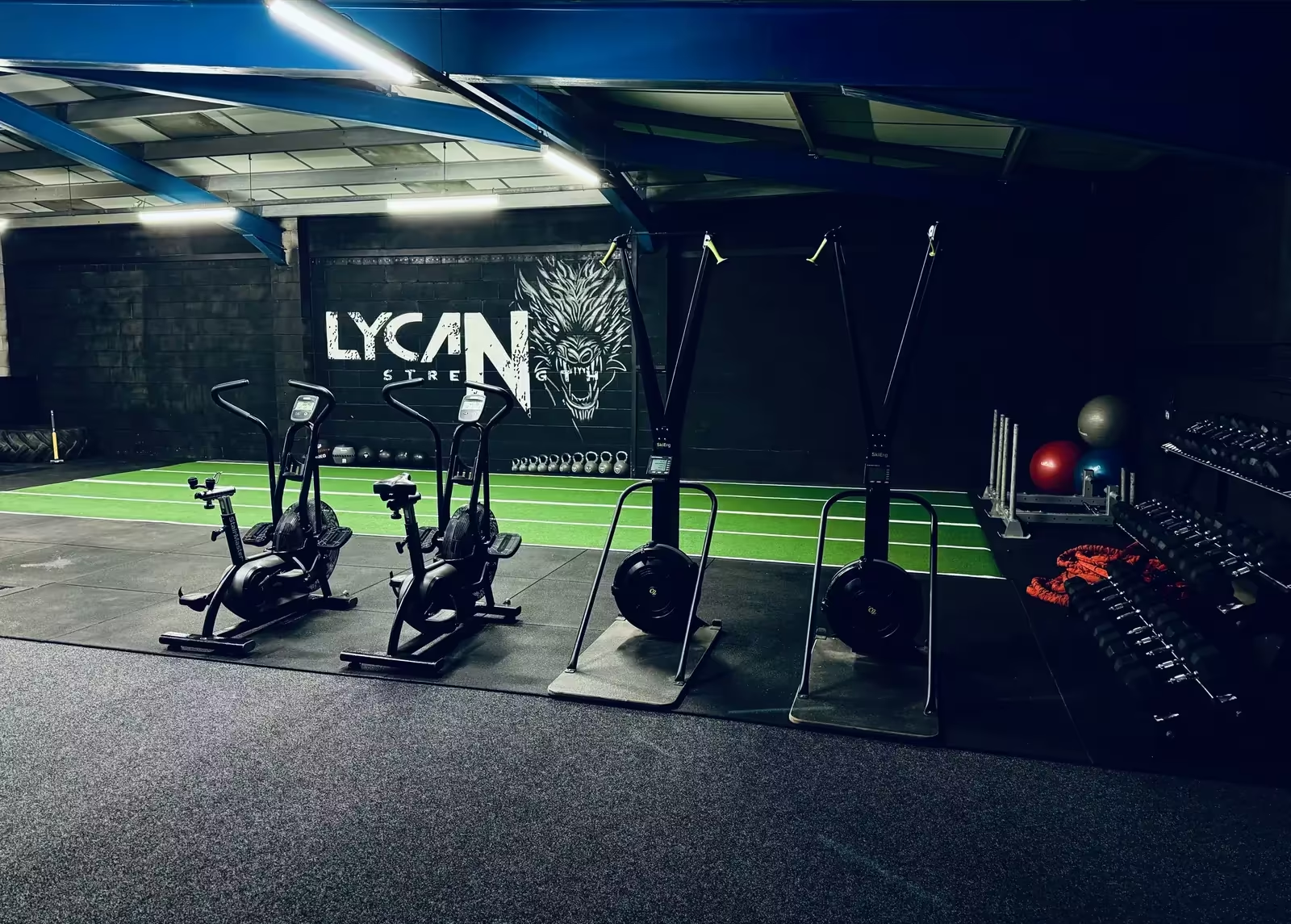
Lycan Strength's timetable has 6am strength and conditioning classes on four weekdays, which suits men who want training done before work, and the full class timetable shows the evening options too.
What progress looks like
Expect the first two weeks to show a quick drop as water and stored carbohydrate go. After that, 0.5 to 1 kg a week is a good pace. Over 12 weeks that adds up to roughly 5 to 10 kg for most men, a notch or two on the belt and noticeably stronger lifts.
It is not dramatic week to week, and some weeks the scales will not move at all. Keep the waist measurement going, keep the lifts heavy and judge it over the full three months.
Members' guide
Keep reading with your free week
The full guide is for members and people on a free trial. Claim 7 days free and it opens straight away on this device, along with every other guide.
Already a member? Log in to read it
Unlock the full guide
Seven days of classes, free. We will be in touch to book your first session.
Questions
Why do men lose weight faster than women?
Men are usually larger with more muscle, so they have higher maintenance calories and can run a bigger deficit in absolute terms. The underlying process is the same.
Can I still drink beer and lose fat?
Yes, within limits. Stay within the UK low-risk guideline of 14 units a week, count the calories and plan for the food that tends to follow.
What is a healthy waist size for a man?
Under 94 cm is the NHS guide, and under half your height is a simple rule from NICE.
Do testosterone boosters help with fat loss?
Most over-the-counter boosters have little evidence behind them. Losing excess fat, sleeping well and drinking less are far more effective.
General guidance for healthy adults. If you have a medical condition, injury or are pregnant, check with a health professional before changing your training or diet.