
- Recomposition works best for beginners, returners and people with more fat to lose.
- Eat at maintenance or a small deficit, with protein at 1.6 to 2.2 g per kg.
- Progressive strength training is essential. Cardio alone will not do it.
- Track waist, photos and strength, because the scales may barely move.
What recomposition means
Body recomposition, or recomp, means changing the ratio of fat to muscle in your body by losing fat while gaining muscle over the same period. Your weight might barely change, but your shape, strength and clothes size do.
For years, the standard advice was that you had to bulk to build muscle and cut to lose fat, alternating between the two. That is still useful for experienced, lean lifters. But for a lot of people, especially those new to proper training, both can happen at once, and trying to do them separately just wastes time.
It is also the most motivating route for many people, because strength keeps going up even while the waistline comes down, and you are never stuck in a phase you dislike.
Who can realistically recomp
Recomposition is not equally likely for everyone. It works best for:
- Beginners to structured resistance training, who respond quickly to a new stimulus.
- People returning after a break, who tend to regain lost muscle relatively quickly.
- People carrying more body fat, who have more stored energy available to support muscle growth.
- People who have trained without a plan, for whom better programming and more protein can unlock new progress.
If you are already lean and have been lifting seriously for several years, recomposition becomes very slow. In that case, dedicated phases of building with a small surplus, as described in our lean bulk guide, and separate fat loss phases usually work better. Many people in their 40s and 50s who have never lifted properly fall squarely into the first group.
How to eat for recomposition
Energy intake is the main lever. A large deficit makes building muscle very difficult, and a large surplus adds fat. The sweet spot is maintenance or a small deficit of around 10 to 20%.
- More fat to lose: a moderate deficit of around 15 to 20% still allows muscle gain for beginners.
- Closer to lean: eat around maintenance and let training drive the change.
- Protein: 1.6 to 2.2 g per kg of body weight a day, spread across three or four meals. This is the single most important nutrition factor, as covered in protein for fat loss.
- Carbohydrates around training: they fuel harder sessions, and harder sessions drive muscle growth.
Keep the rest of your diet simple: plenty of vegetables and fruit for fibre and micronutrients, enough fat for hormones and flavour, and fewer liquid calories. A recomp diet looks remarkably like a normal healthy diet, just with more protein than most people are used to.
How to train for recomposition
Muscle only grows when it is given a reason to. That means resistance training that gets progressively harder over time, not the same weights for the same reps month after month. Our guides to how to build muscle and progressive overload cover the principles in detail.
- Train each major muscle group at least twice a week.
- Build sessions around compound lifts: squats, deadlift variations, presses, rows, pull-ups or pulldowns, and lunges.
- Do most sets in the 6 to 15 rep range, taken close to failure.
- Add reps or load over time, and keep a training log.
- Rest two to three minutes between sets of the big lifts so the quality stays high, and less on smaller exercises.
- Keep cardio as a supporting act: daily walking plus one or two conditioning sessions.
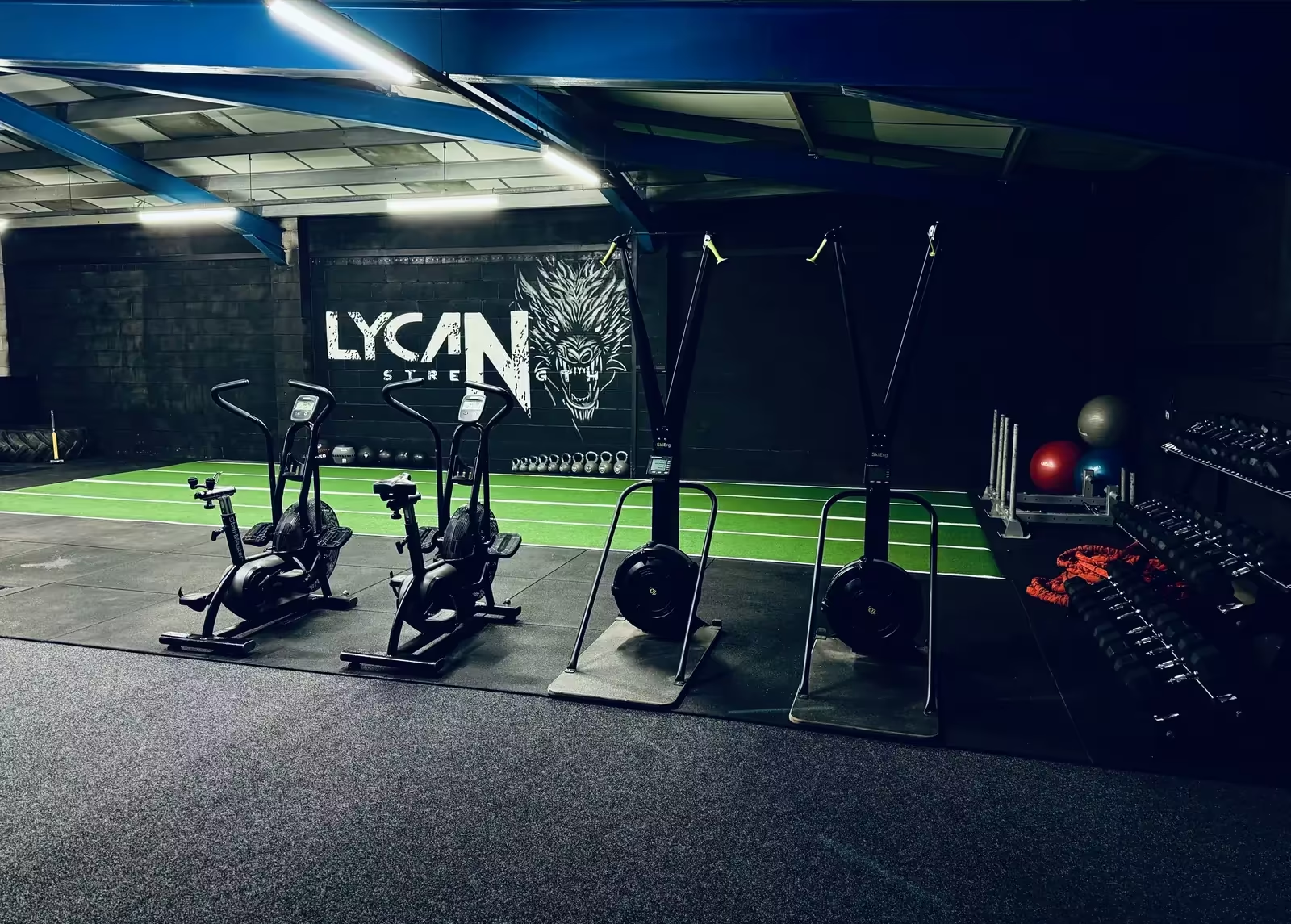
At Lycan Strength, the weekly timetable includes Full Body, Upper and Lower classes, which suit this approach well, and every class is scaled to the person in front of the coach.
Sleep and patience
Muscle is built during recovery, not during the session. Seven to nine hours of sleep is as much a part of recomp as protein and training, and poor sleep makes it harder to build muscle and easier to lose it. Alcohol is worth moderating too, because heavy drinking can blunt muscle repair and wreck the sleep that recomp depends on.
Recomp is slower than a straight diet or a straight bulk. A beginner might see clear changes in shape and strength within two or three months, while the scales move only a couple of kilos. Give it at least 12 weeks before you judge it, and six to twelve months for a substantial change.
How to track progress
The scales are the least useful tool here. If you lose 3 kg of fat and gain 1.5 kg of muscle, the scales show 1.5 kg and you might decide it is not working. Use these instead:
- Waist measurement every two weeks. A falling waist at a stable weight is a strong sign of recomposition.
- Progress photos in the same light and pose once a month.
- Strength numbers on your main lifts. Rising strength in a small deficit is a very good sign.
- How clothes fit, especially trousers at the waist and tops across the shoulders.
Our guide on measuring progress beyond the scales explains how to set these up so they are consistent.
When to switch approach
If you have been recomping for several months and progress has clearly stalled, it may be time to pick a single goal. If you are happy with your muscle but want to be leaner, run a focused fat loss phase. If you are already lean but want more muscle, a small surplus will speed things up.
Recomp is a brilliant starting point, not the only tool. Most people who start lifting in their 30s, 40s or 50s will get a year or more of steady recomposition before they need to think about anything more complicated.
Members' guide
Keep reading with your free week
The full guide is for members and people on a free trial. Claim 7 days free and it opens straight away on this device, along with every other guide.
Already a member? Log in to read it
Unlock the full guide
Seven days of classes, free. We will be in touch to book your first session.
Questions
Can you lose fat and build muscle at the same time?
Yes, especially if you are new to lifting, returning after a break or carrying more body fat. It needs plenty of protein and progressive strength training.
Should I eat at maintenance to recomp?
If you are fairly lean, maintenance works well. With more fat to lose, a small to moderate deficit is usually better.
How long does body recomposition take?
Expect visible changes in two to three months and more substantial change over six to twelve months.
Why is the scale not moving during recomp?
Fat loss and muscle gain can cancel each other out on the scales. Waist, photos and strength are better measures.
General guidance for healthy adults. If you have a medical condition, injury or are pregnant, check with a health professional before changing your training or diet.